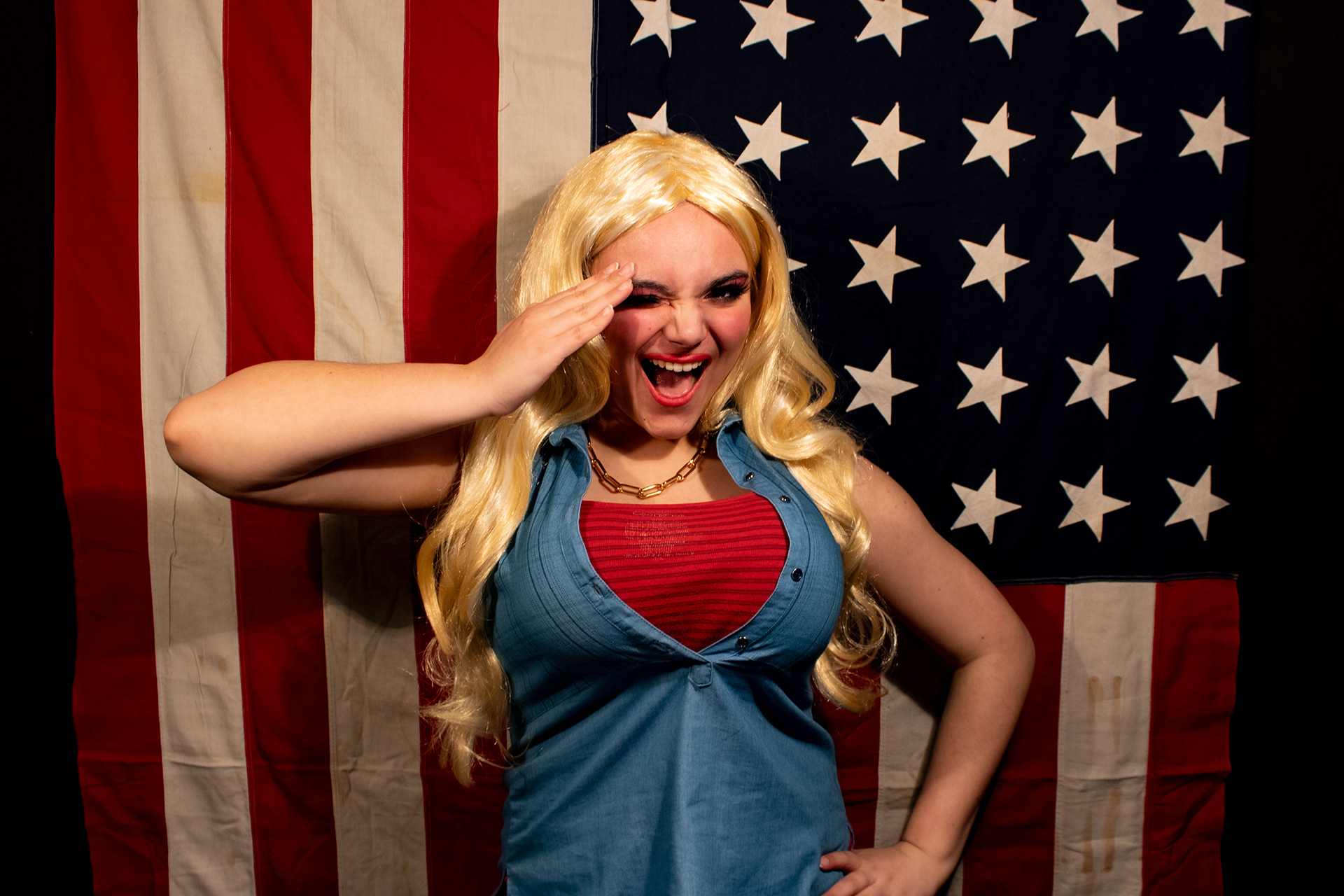
WITHDRAWN, 2025
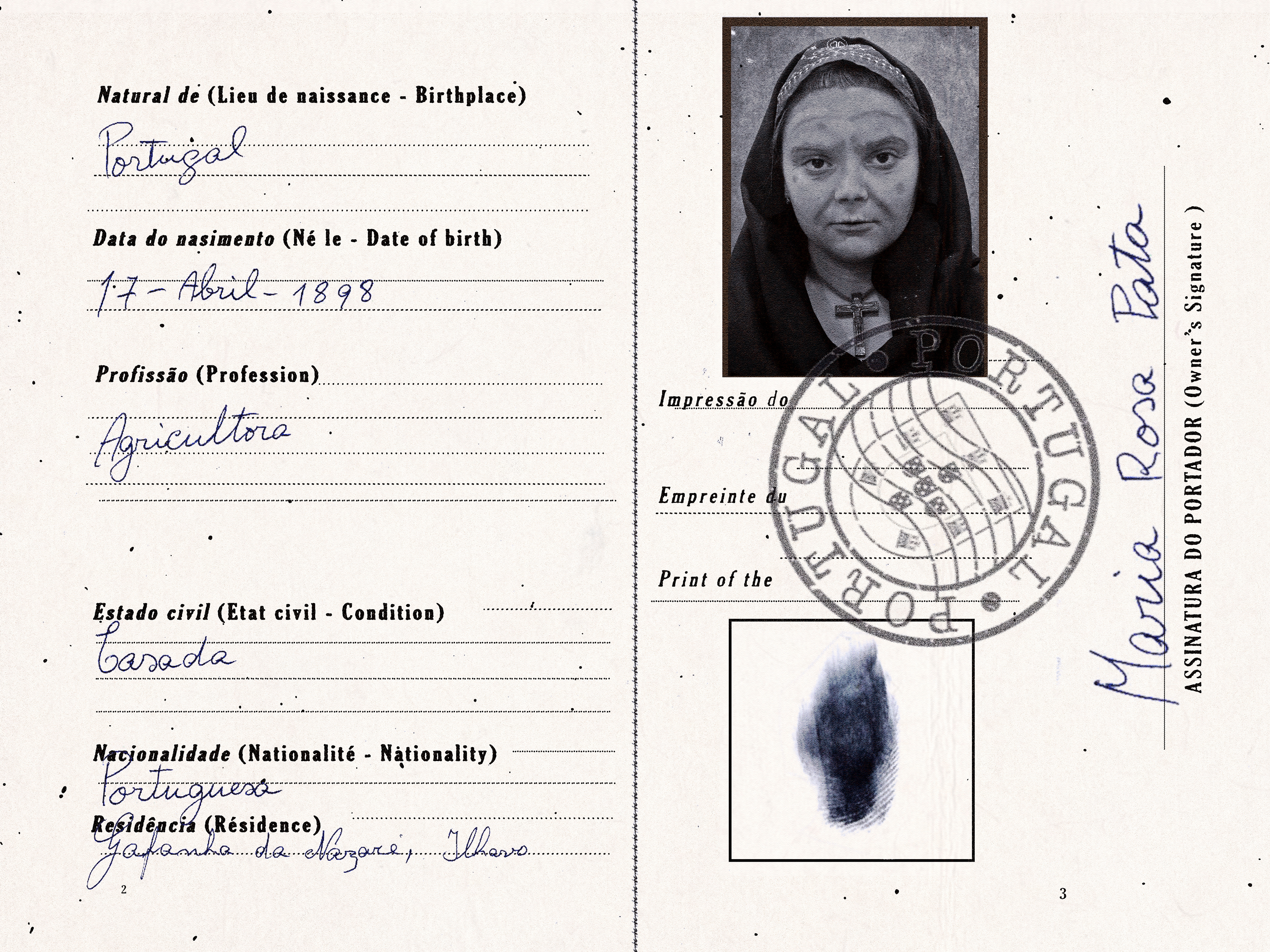
Great Great Grandmother Pata. [TEXT: Natural Of: Portugal. Date of Birth: 17th April, 1898. Profession, Farmer. Marital Status: Married.
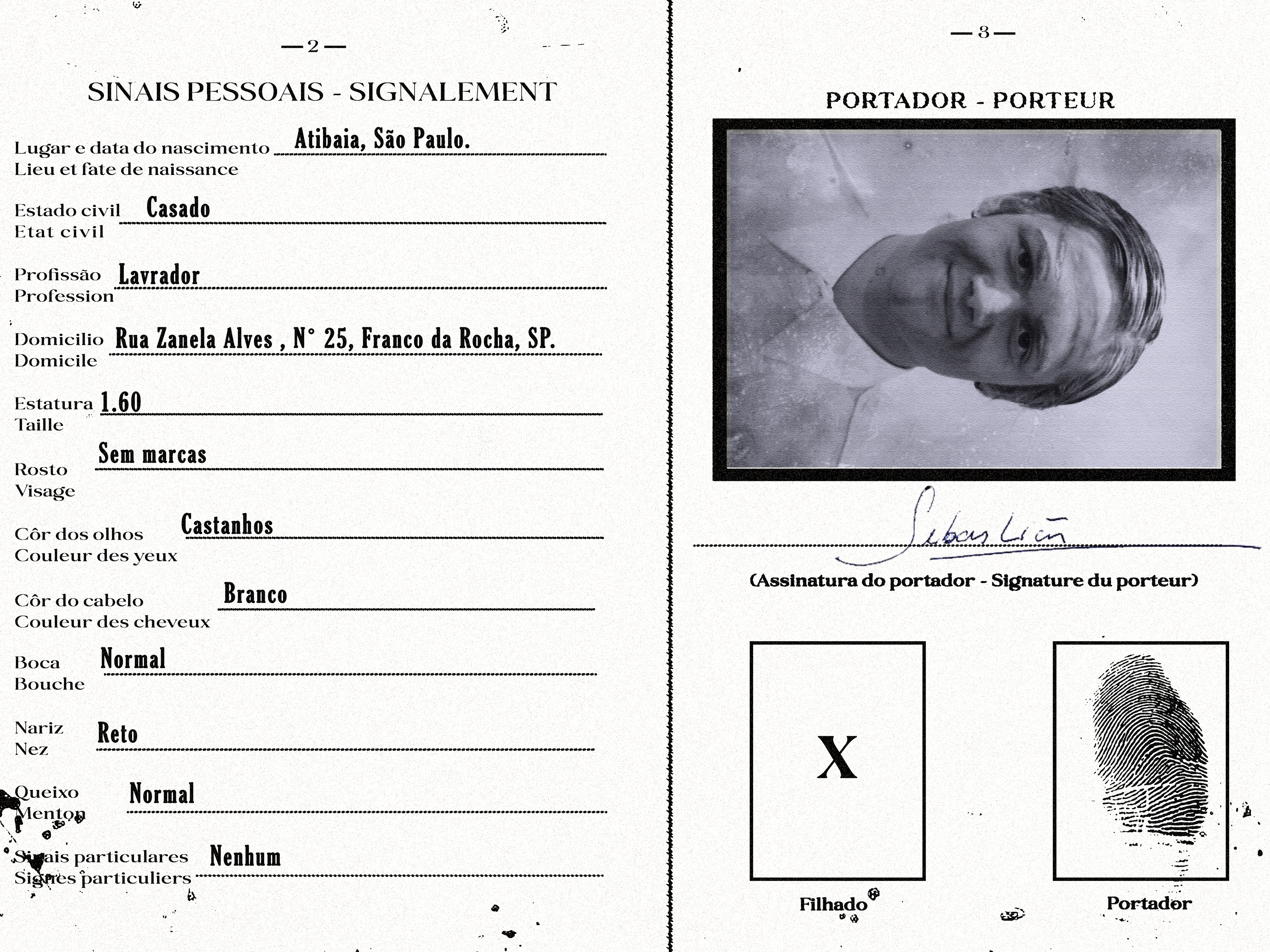
Great Great Grandfather, Sebastiao. [TEXT: Place of Birth: Atibaia, Sao Paulo. Marital Status: Married. Profession: Railworker. Height: 1.60. Face: Without Marks.
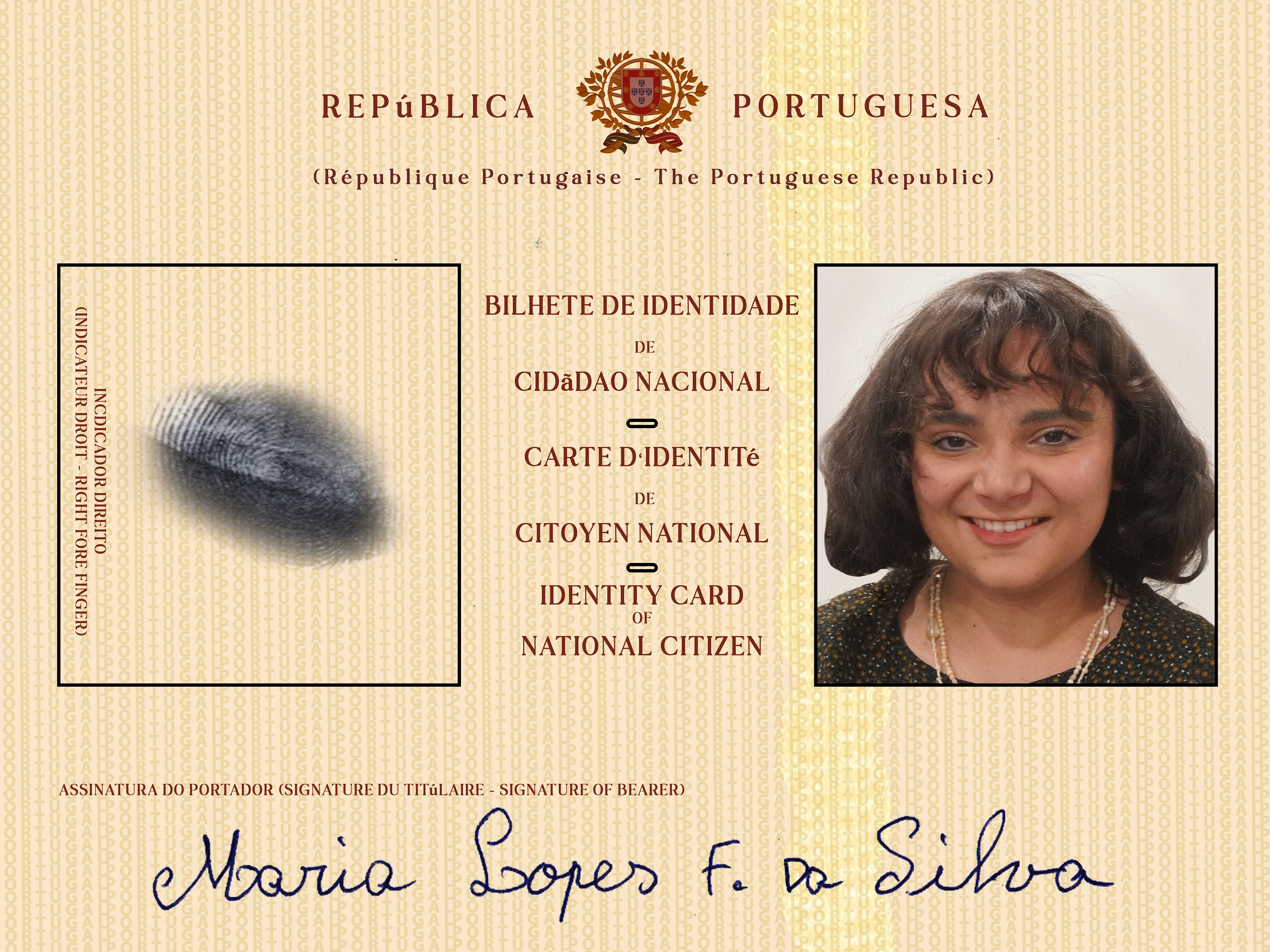
Grandmother Maria.
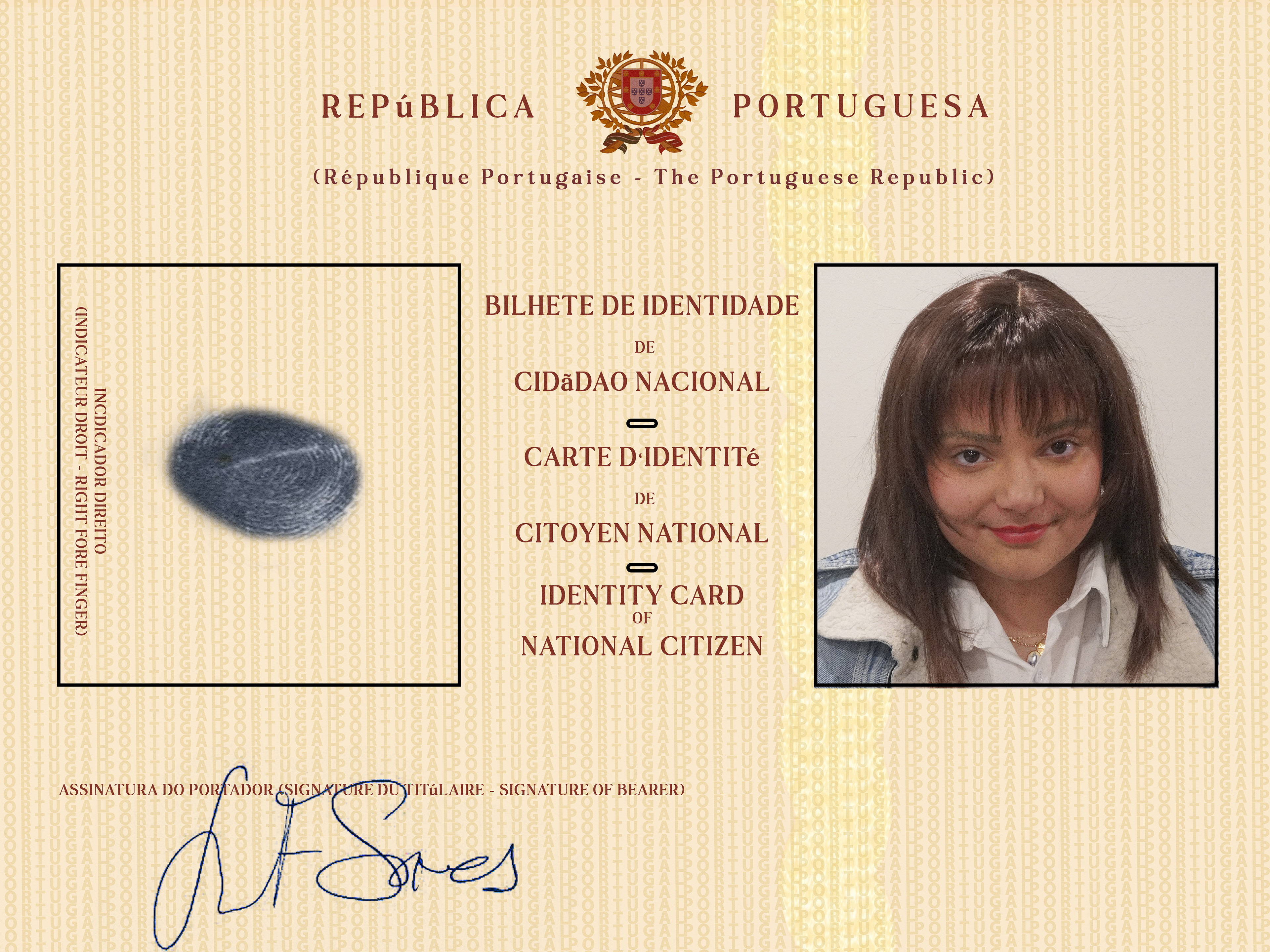
Mother Luciana
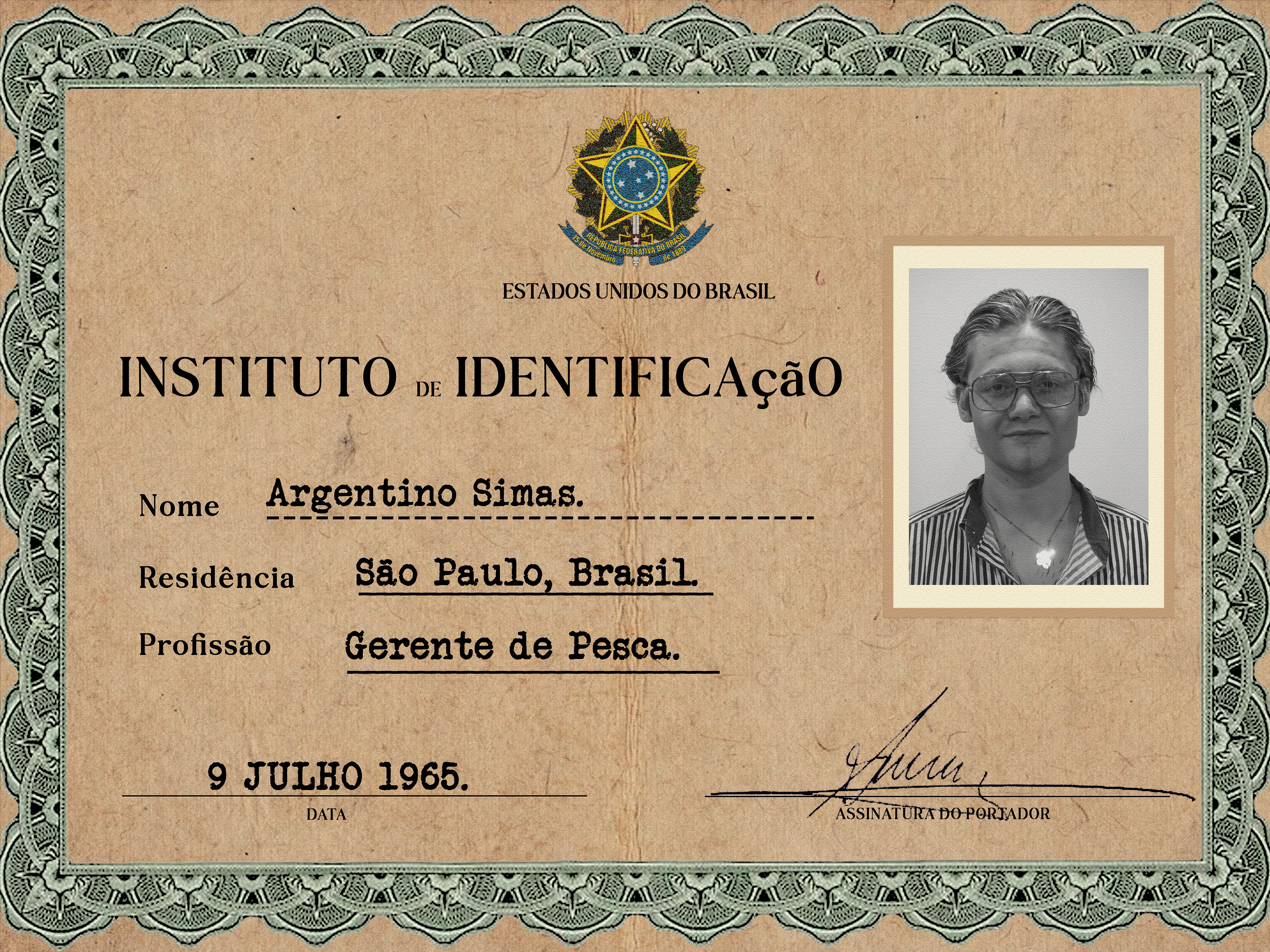
Great Grandfather, Argentino.

Great Grandmother, Gloria Pata.

Father Paulo Jr.

Grandfather Paulo Sr.

The Artist
Reflecting on her Portuguese Brazilian roots, the artist considers notions of identity and cultural visuality. Through the creation of facsimile documents – representative of cultural belonging – the artist reflects on her family’s journey which ultimately culminates in her Canadian identity. This series spans four generations, beginning with her great great grandparents and represents the similarities between the immigration story of her maternal Portuguese side and her paternal Brazilian side. Through the contextualization of simultaneous belonging and nonbelonging, Simas is represented by her alter ego Thee Artist, symbolizing existing in multiple cultural realms at a given time. True to her artistic style, the artist embodies and visually represents her family through the use of wigs, makeup and in camera, theatre-based effects. Through the recognizable iconography of cultural identification cards, the artist hopes to bring a sense of relatability – a reflection of the journey of immigrant families in Canada.
The First Supper, 2024
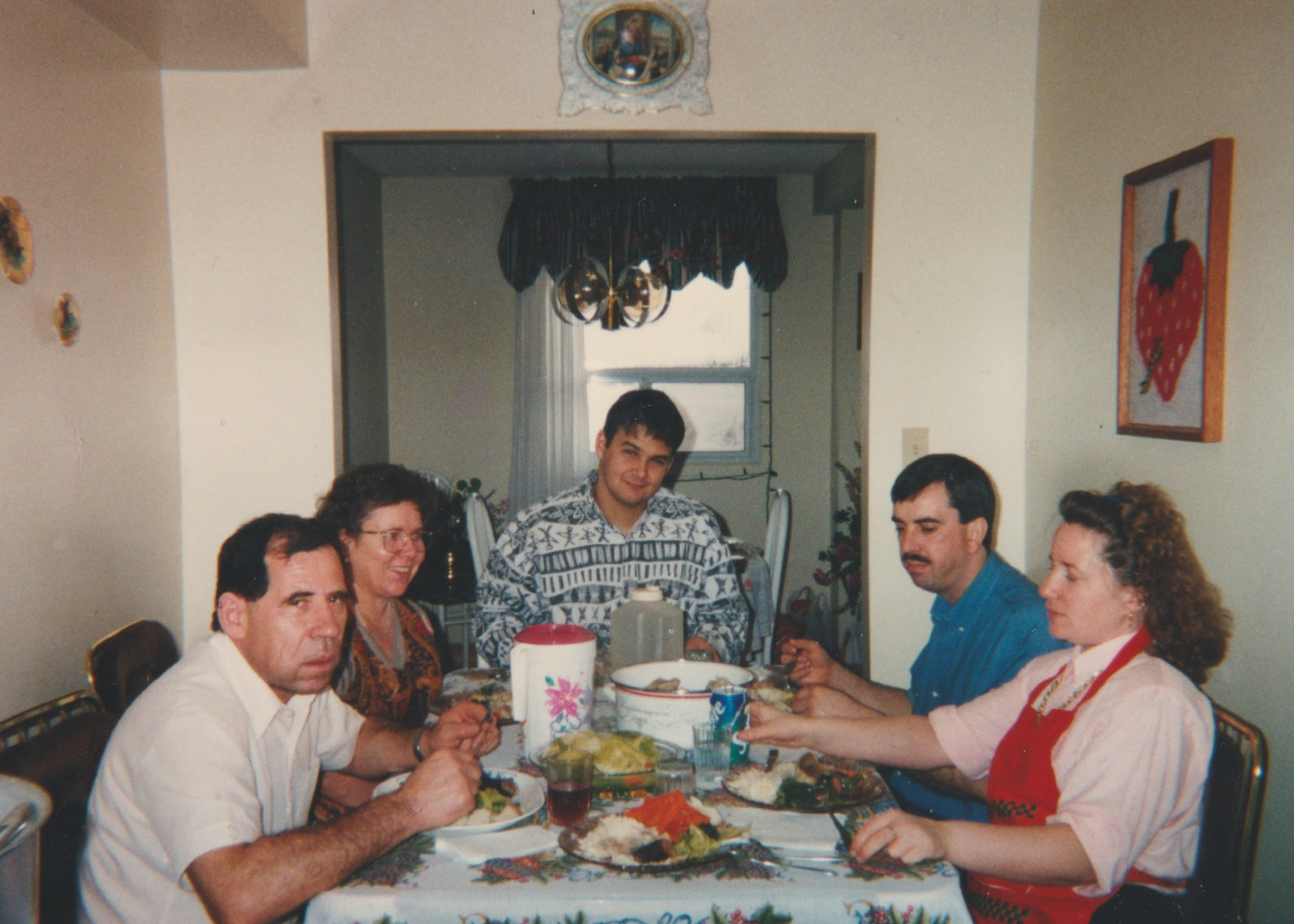
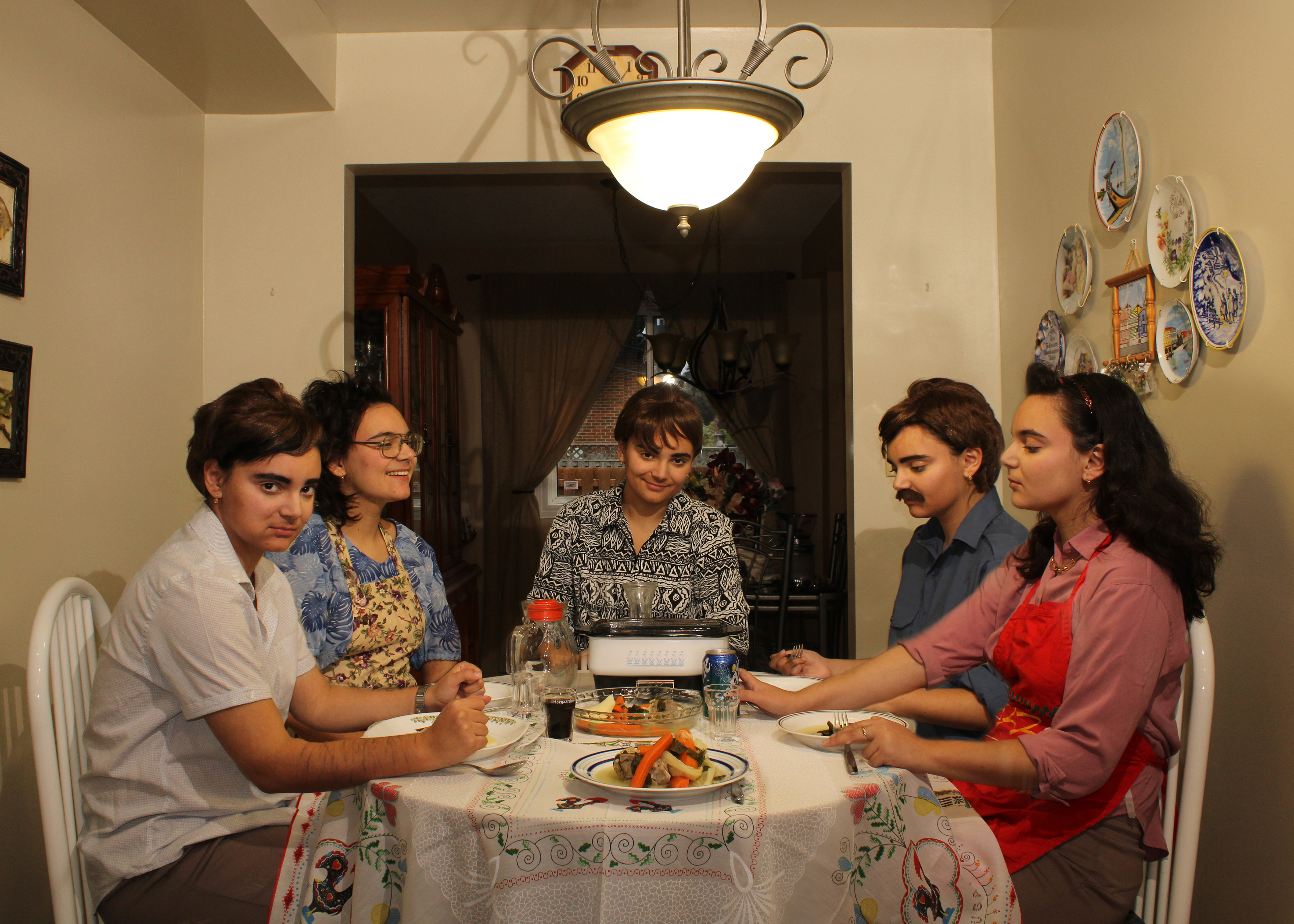
The First Supper is Simas’ recreation of The First Supper 1995, a photograph of Simas’ family. Stricken by the photograph's quasi-religious composition, the artist places herself in the shoes of her family, and subsumes herself in costume, including wigs, clothes, jewellery and makeup in order to inter the internal psyche of those she portrays. It is an introspective look at the immigrant experience, reflecting on cultural dilution over times and differences between being a first generation Canadian versus recent Portuguese Brazilian Immigrants.
Figurinas, 2025
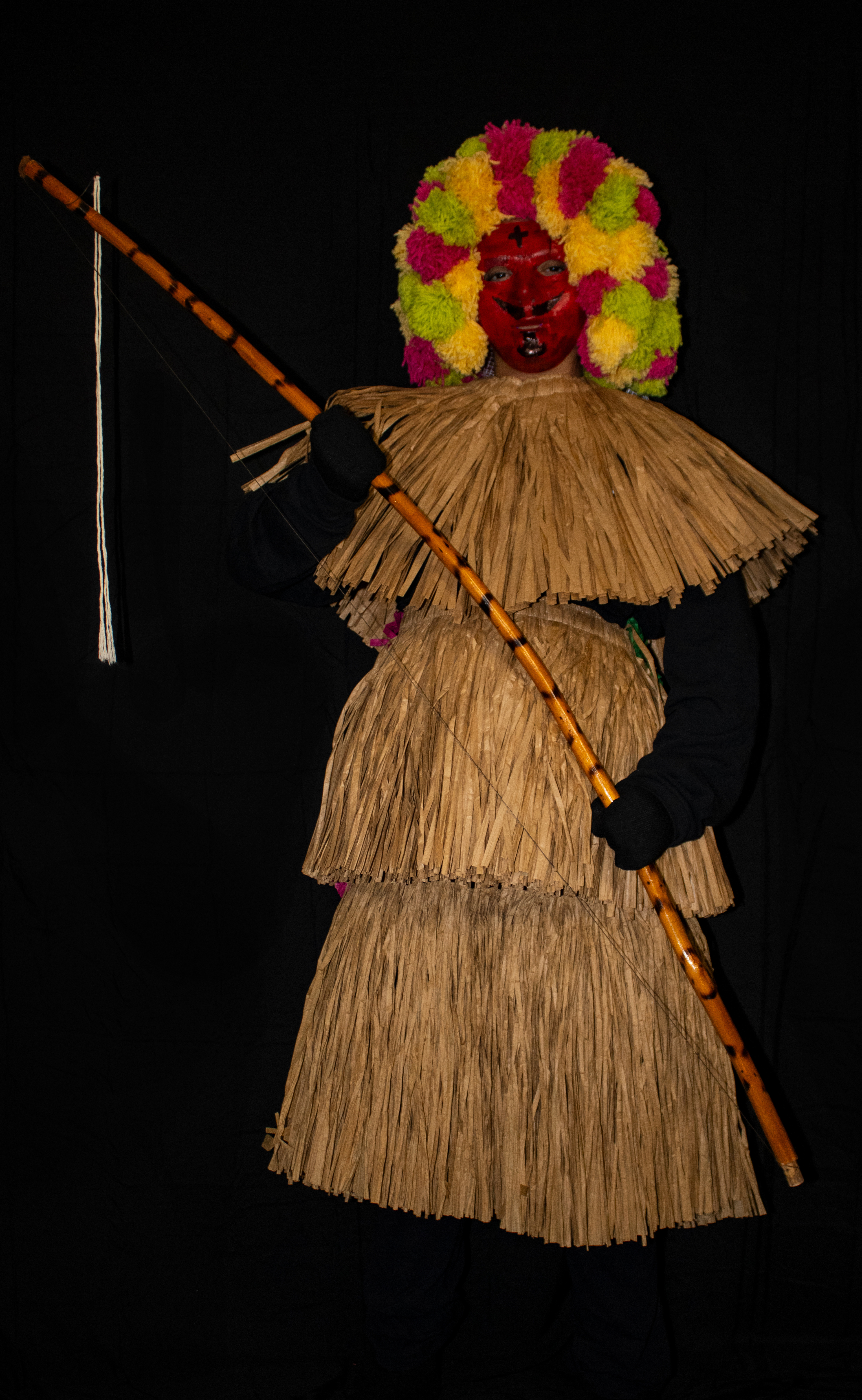
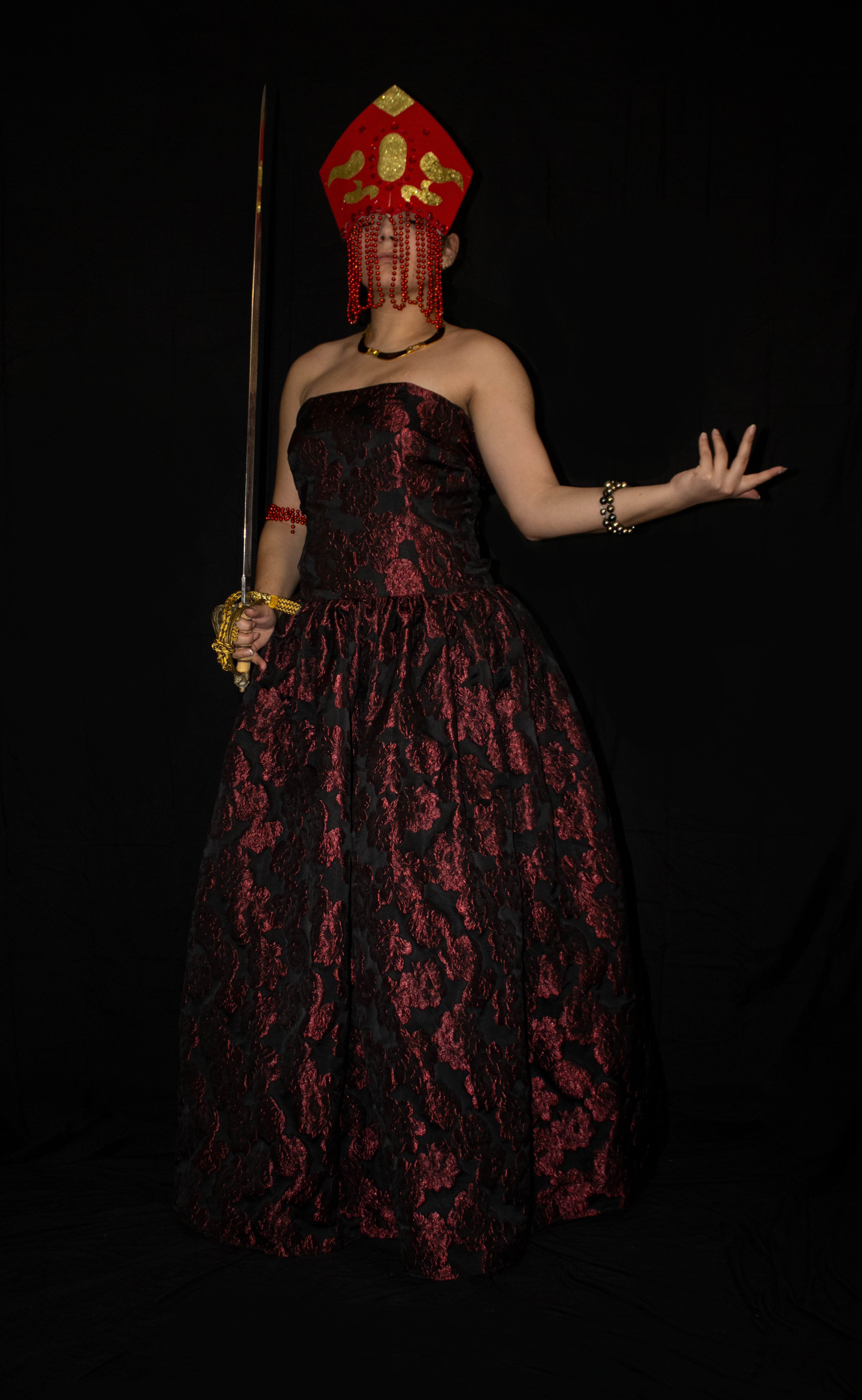
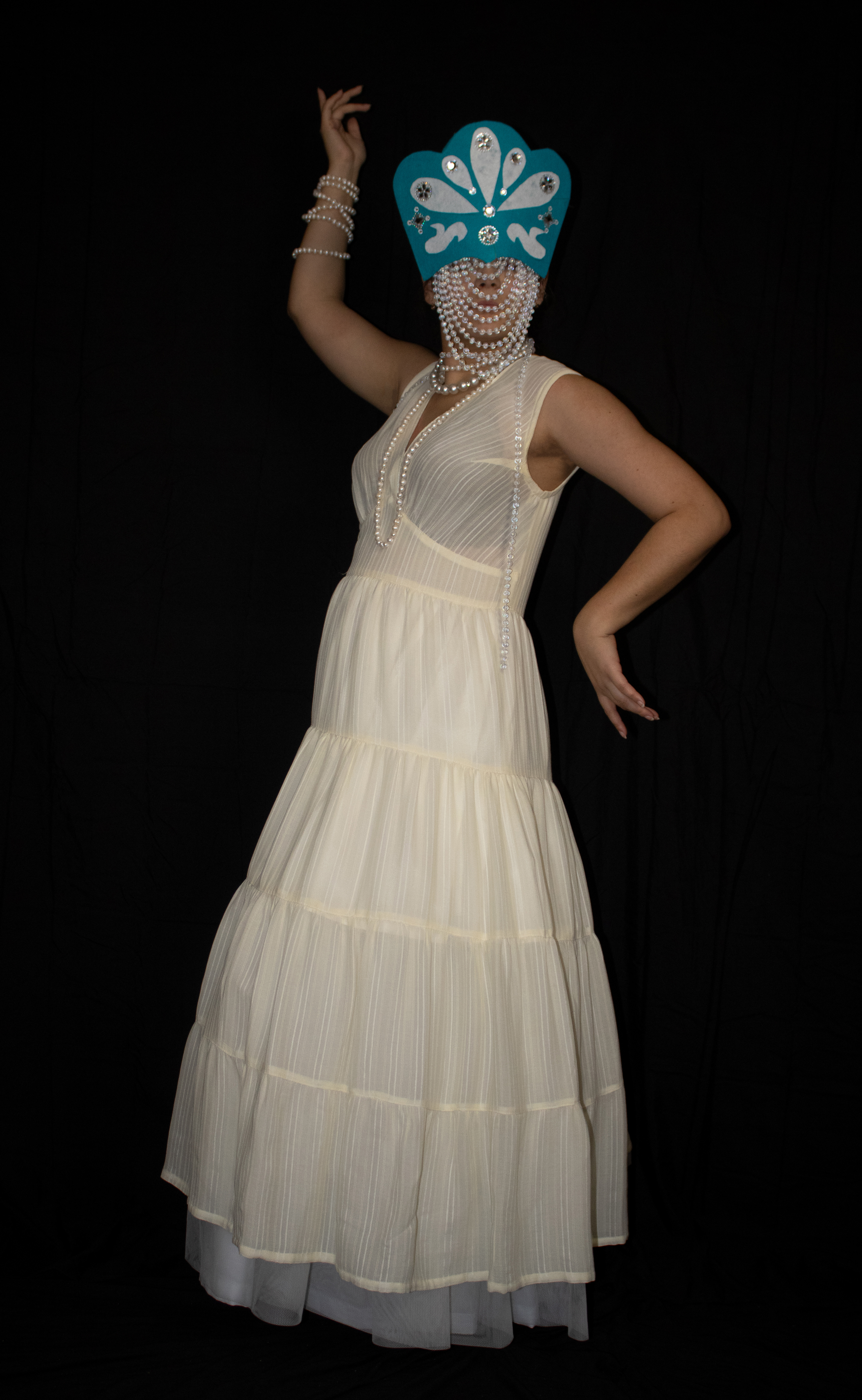
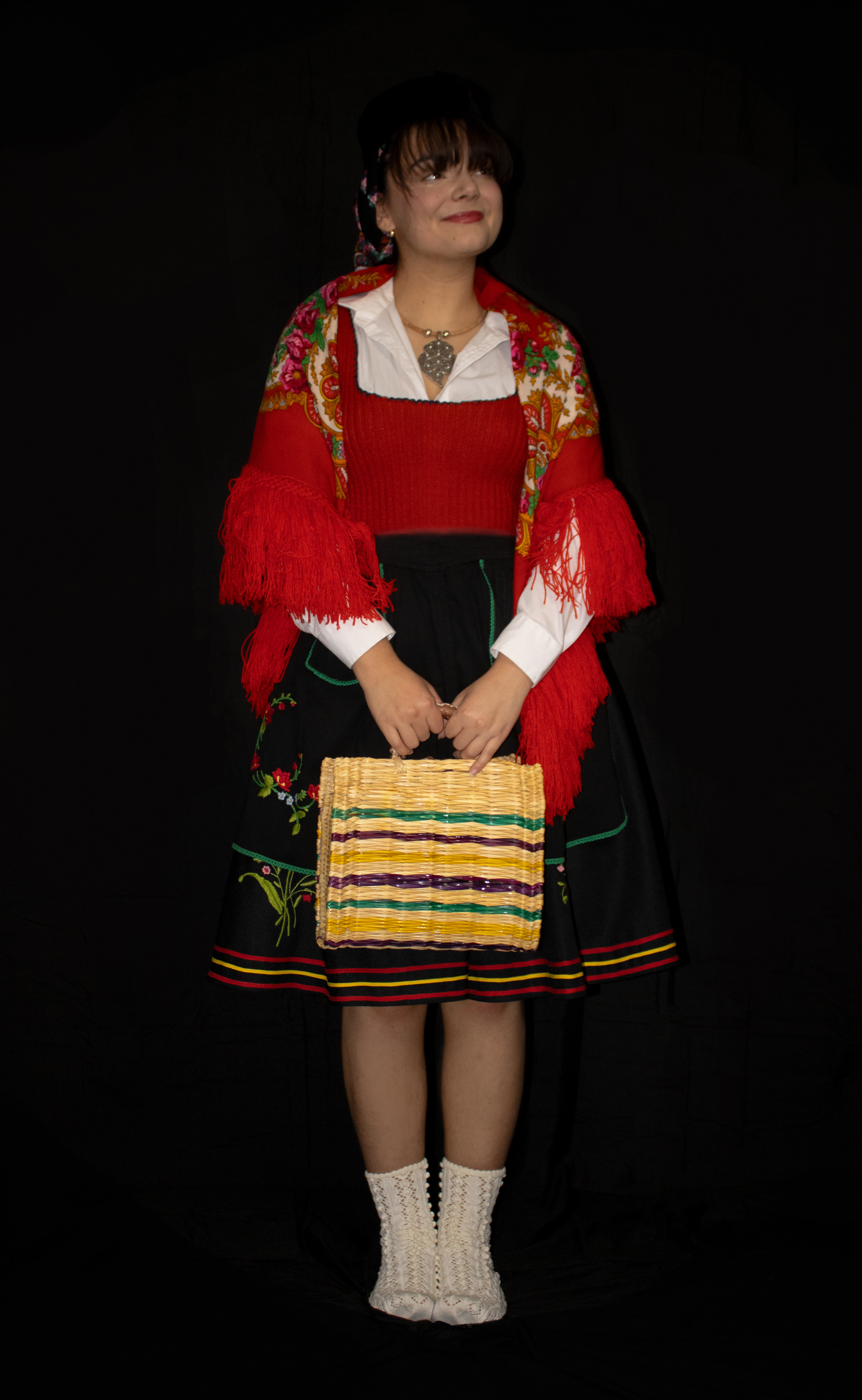
Figurinas is an exploration of cultural folklore and the ways in which beliefs manifest in visual realms. This series features [L - R] the Careto, Iansã, Iemanja and the Nazaréna. Through this series, the artist wishes to highlight aspects of her cultural background which may not be common in discourse surrounding Portugal and Brasil.
The Careto is a mischievous figure from Portuguese folklore. Belonging to the winter carnival, the Careto is a masked figure who causes mischief and makes whimsical noises through elaborate costuming.
Iansã, representative of the artist's Brazilian heritage, is an Orixá from the Brazilian religion of Candomblé. Iansã, the red clad, masked figure, is the Goddess of winds and weather. Wielding a sword, Iansã is a warrior and a figure representative of feminine force and change.
Iemanjá, mother of all Orixá's, is the Goddess of the sea. Associated to the Mother Mary in Catholicism, Iemanjá is a Goddess representative of unyielding feminine power. Alongside being the mother of all Orixá's, Iemanjá is associated with fertility, femininity, and serves as the over watcher to all fishermen.
The Nazaréna, is a figure hailing from the artist's mother land, Gafanha da Nazaré, Portugal. Dressed in traditional clothing of her region, the artist reflects on the typical, traditional woman hailing from Gafanha. From headscarf, to woven bag, to woolly socks, the artist represents the good nature and high spirits of the people of Gafanha da Nazaré.
LARICA E LALI, 2025
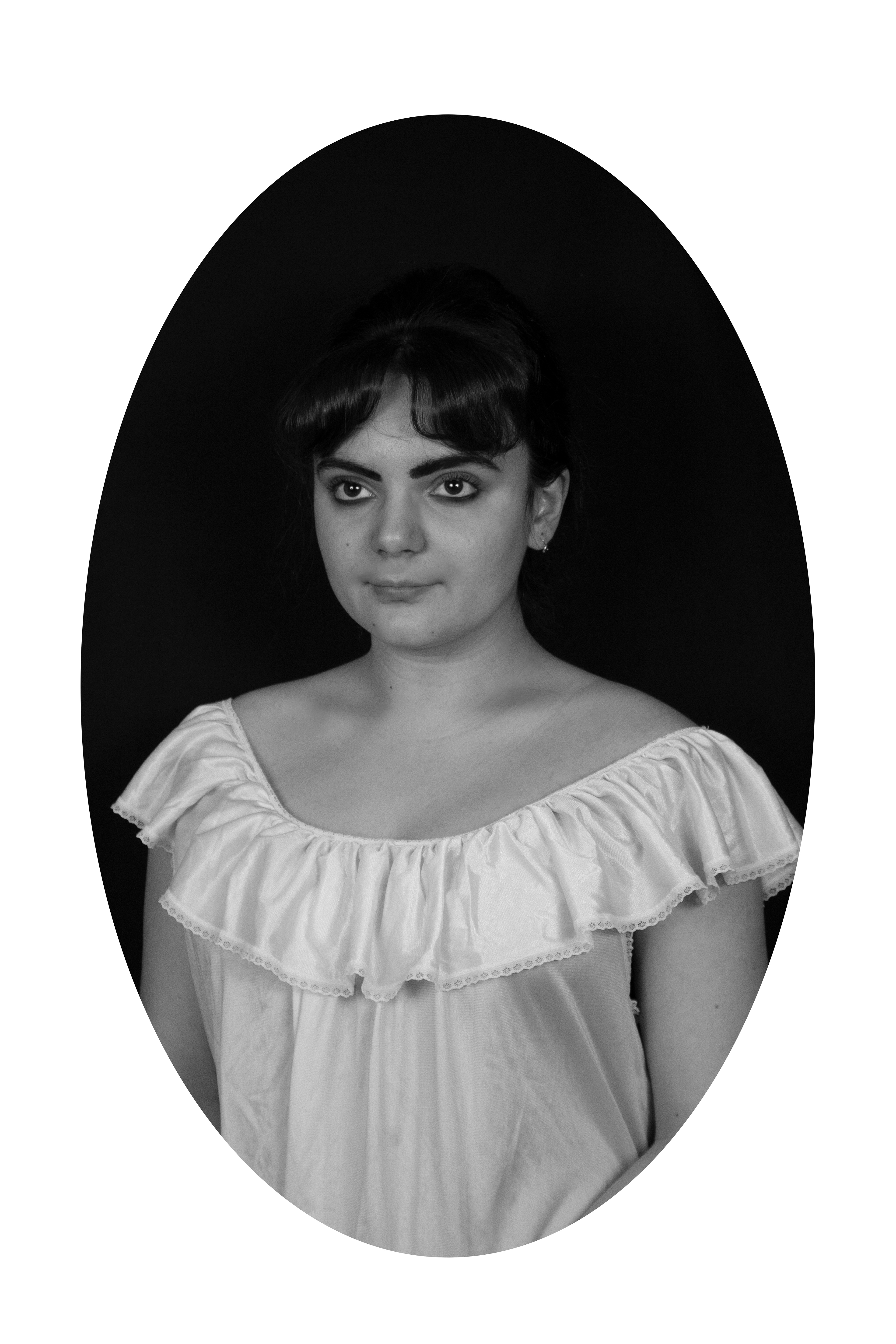
Lali, 2025. In this piece, the artist becomes the role of her great great grandmother on her paternal, Brazilian side, Lali. Through the evocation of Victorian photography, Simas adds a visual narrative not present in photographic discourse.
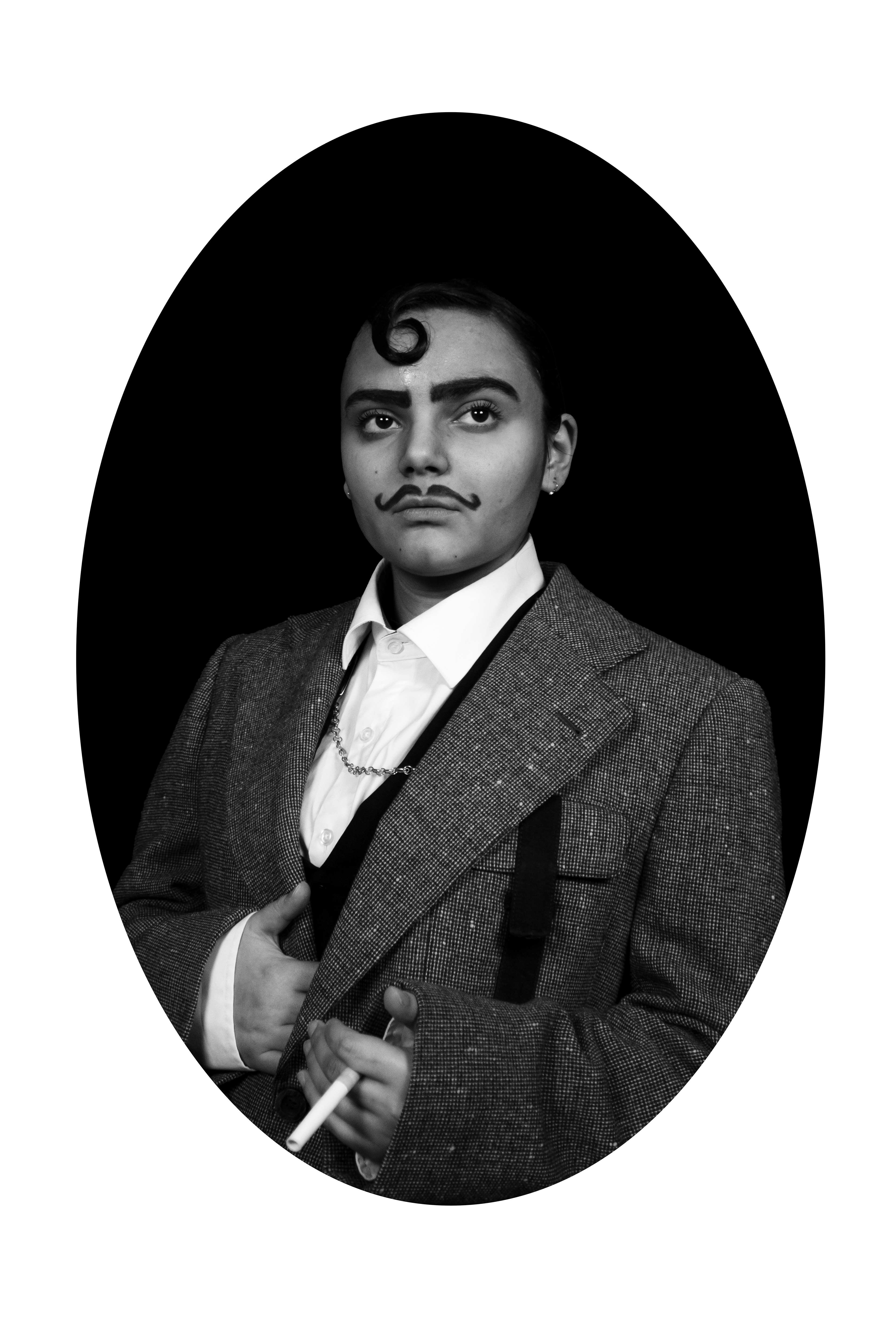
Larica, 2025. In this piece, the artist becomes the role of her great great grandfather on her maternal, Portuguese side, Larica. Through the evocation of Victorian photography, Simas adds a visual narrative not present in photographic discourse.
In this work, the artist embodies the role of her two great grandparents - Avô Larica, from her Portuguese side and Avó Lali from her Brazilian side. Through this work, the artist explores that despite being oceans apart, the different sides of her family are not so different after all. Through the evocation of Victorian photography, the artist wishes to relay notions of familiarity - being something that all viewers will have had contact with in their own family albums - as well as bringing a different narrative into photographic discourse.
What We Carry With Us, 2023
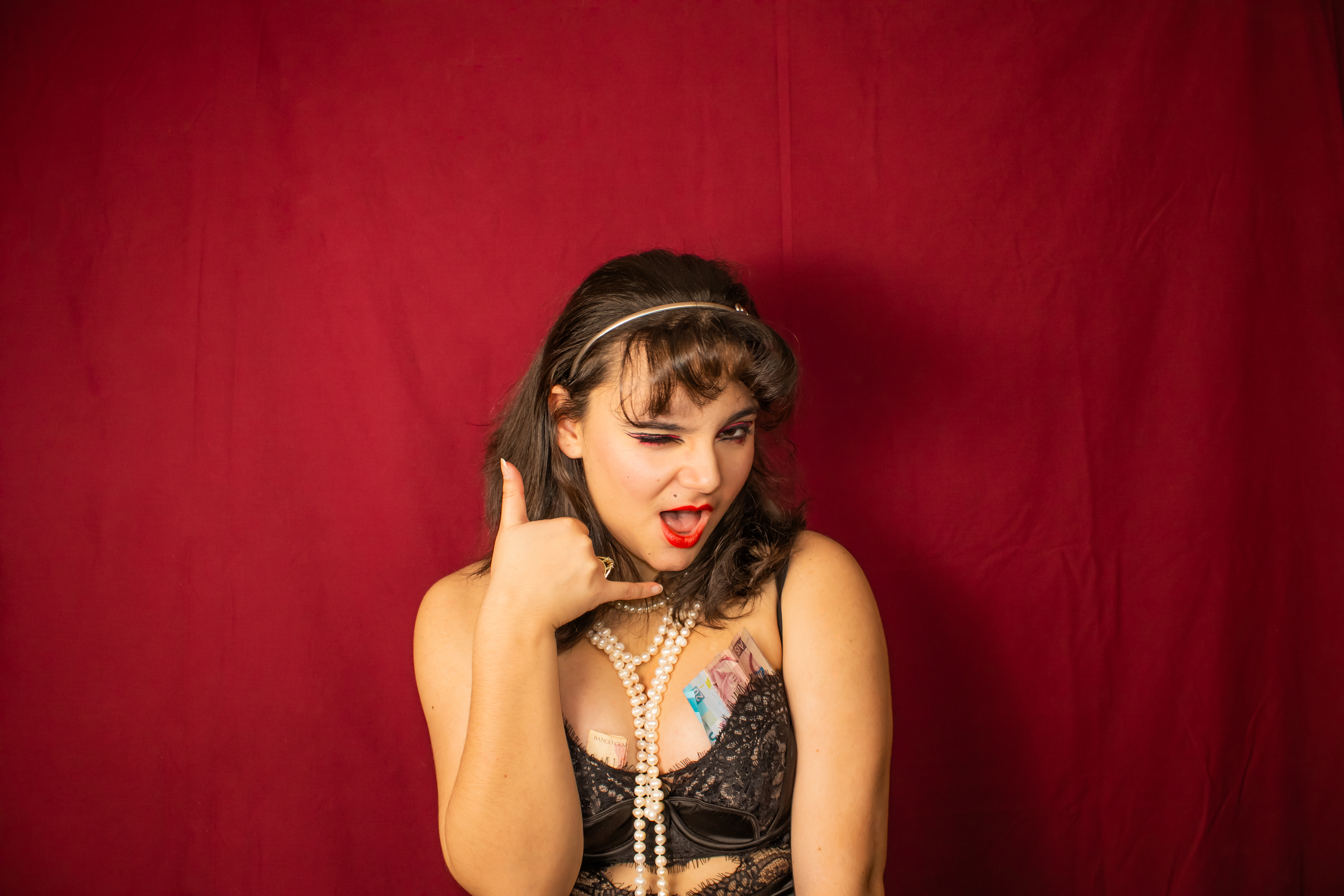
Call Girl, 2023. In this piece, the artist becomes the architype of an exotic dancer. Through colour, wardrobe and acting, the artist illustrates one of the four architypes of women represented in this series.
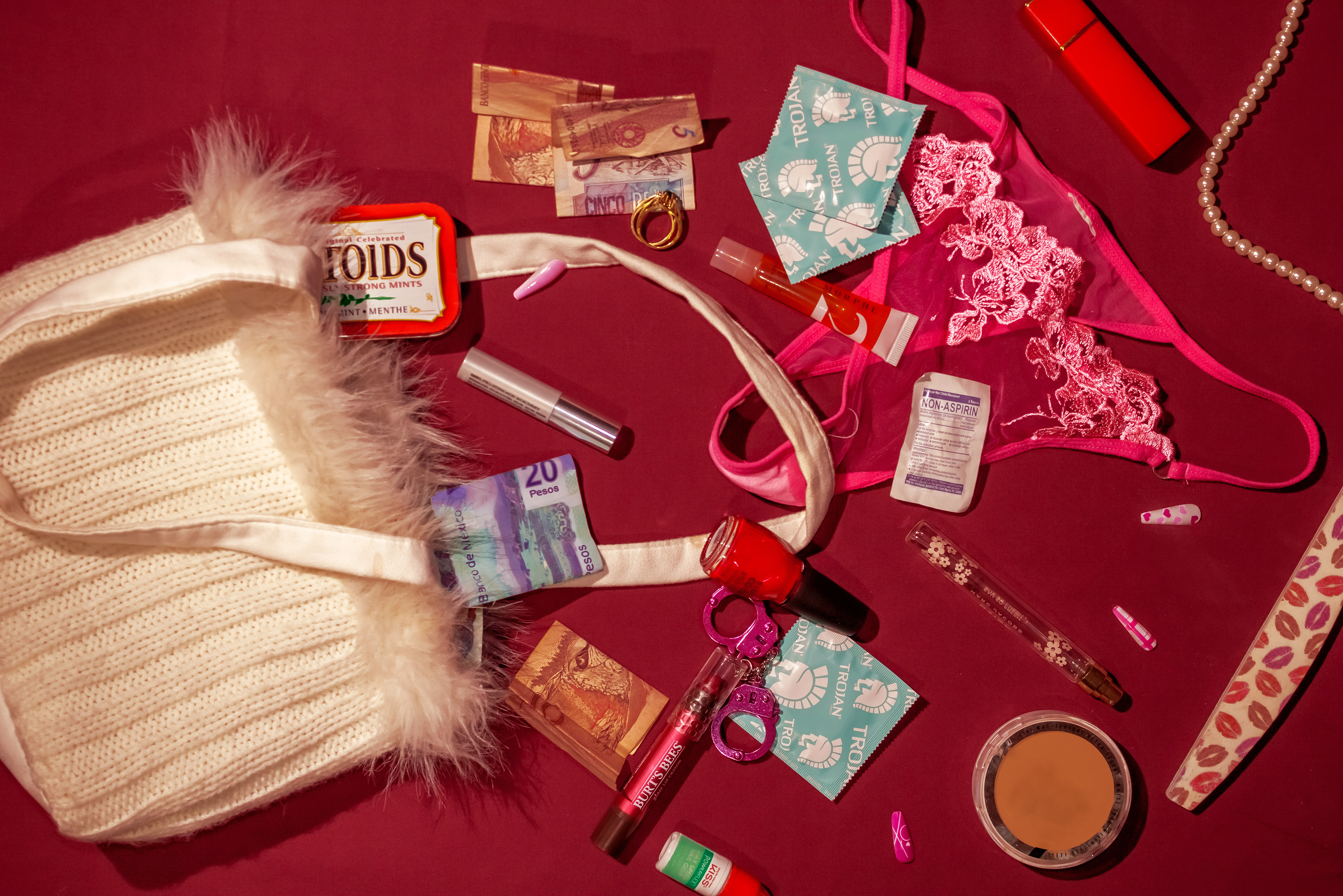
Call Girl Bag, 2023. This piece sees the contents of Call Girl's purse. This series wishes to highlight the similarities and differences between these women - who are they, what unites them, what is needed to get through their day to day life?
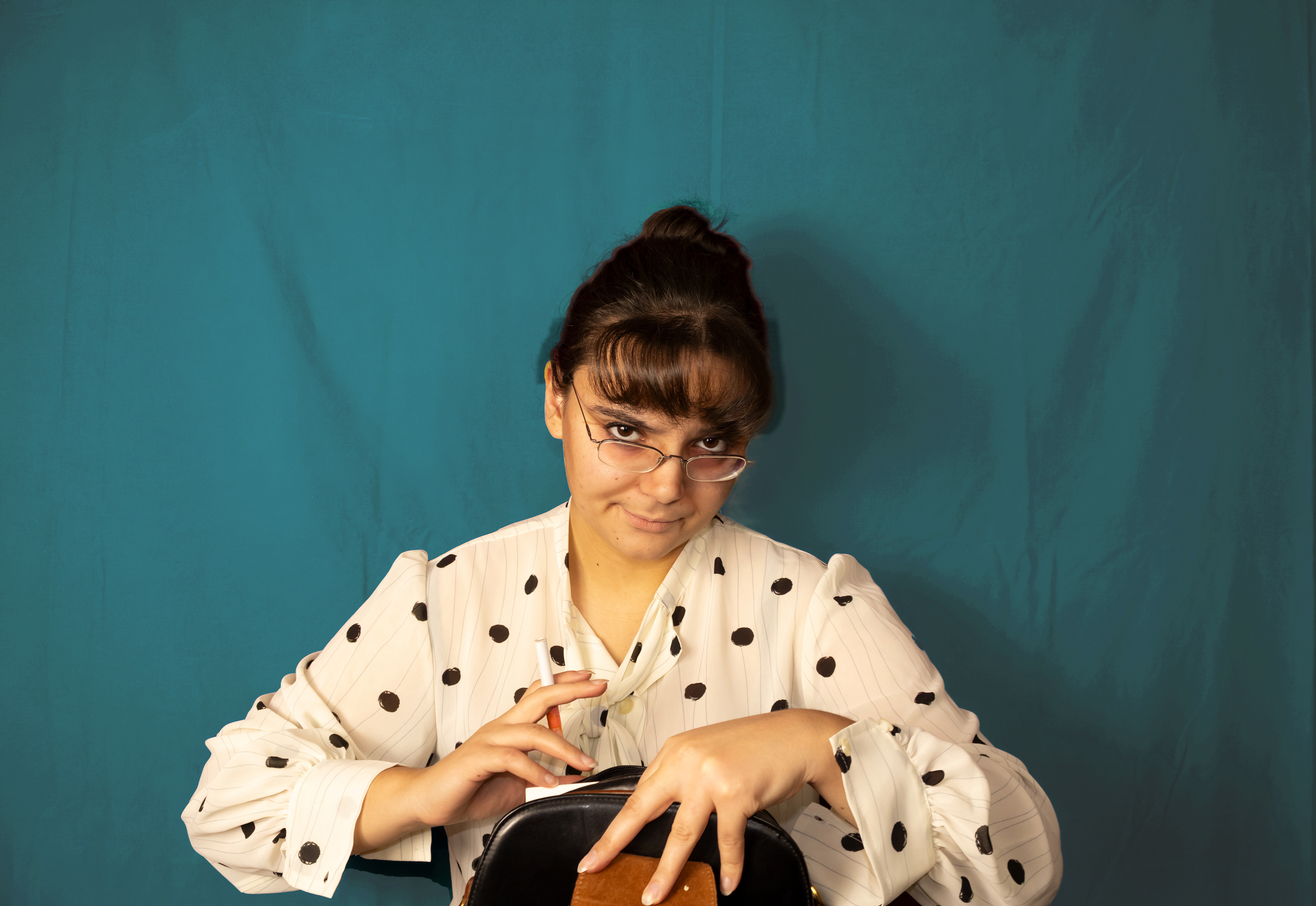
Mean Teach, 2023. Inspired by her own (albeit exaggerated) elementary school experiences, the artist reflects on the character of a mean teacher. Hating her job, hating of children, and indeed, in the wrong field - what does this teacher need to get through her day? Is she really that different from every other woman?
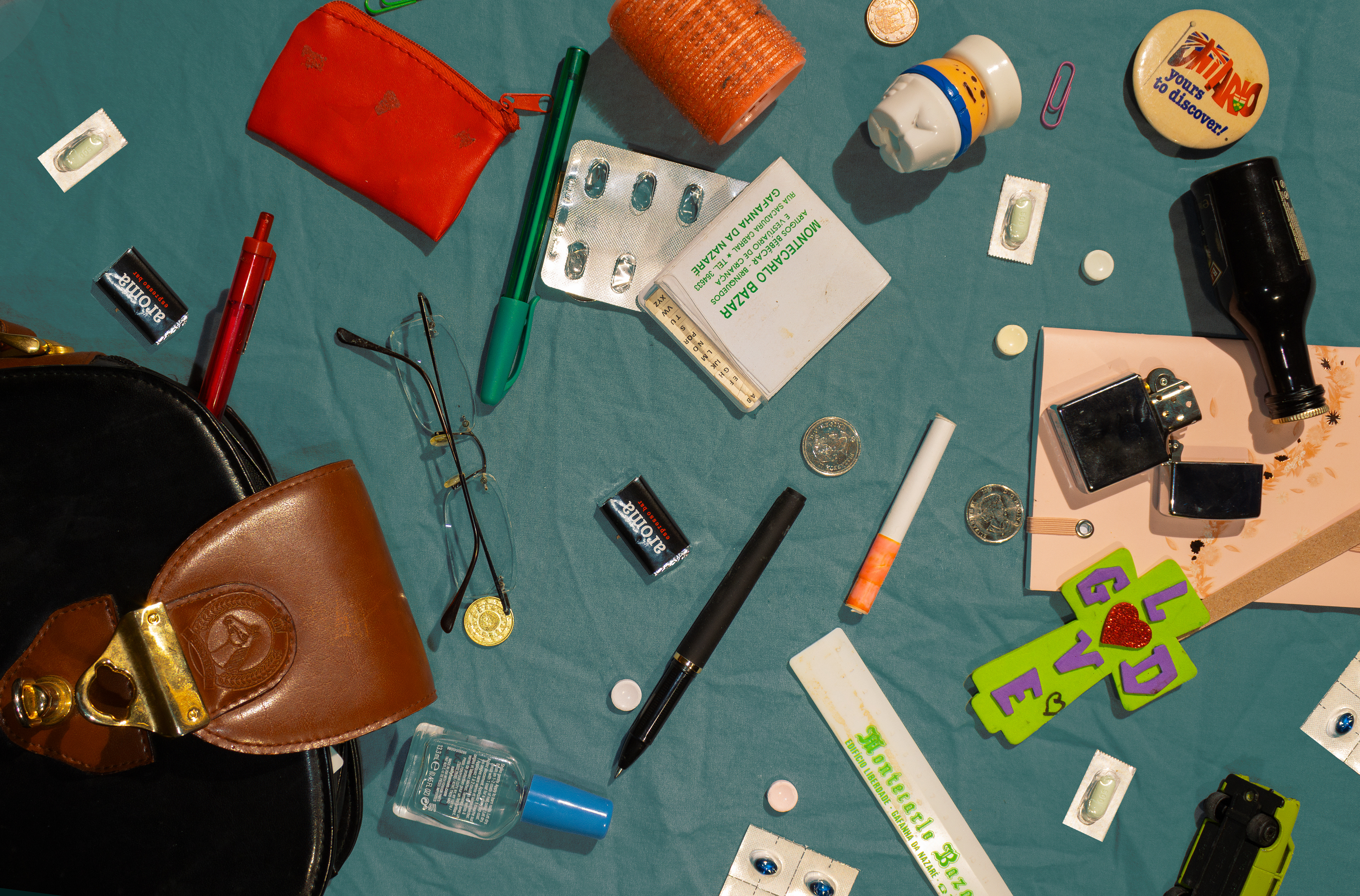
Mean Teach Bag, 2023. Cigs, a mini, scattered, varying pills and confiscated toys are the making of a God fearing, overly disciplining teacher, no?
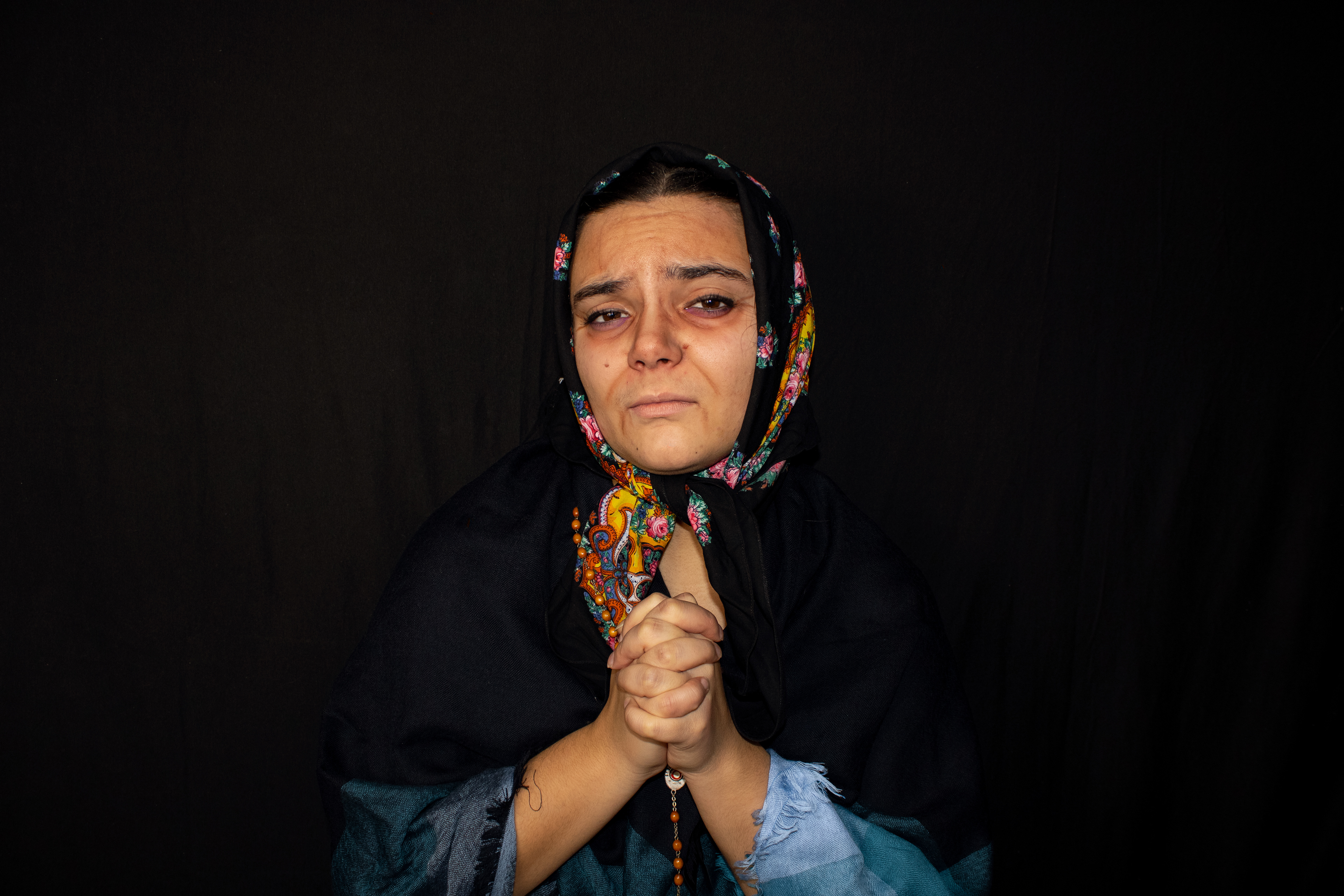
Incomplete, 2023. Inspired by the older Portuguese women the artist grew up with, the artist reflects on the architype of the old, mourning woman. Having lost her husband many years ago, this woman refuses to ever wear full colour again - only allowing pops in her headscarf, rosary, and shall.
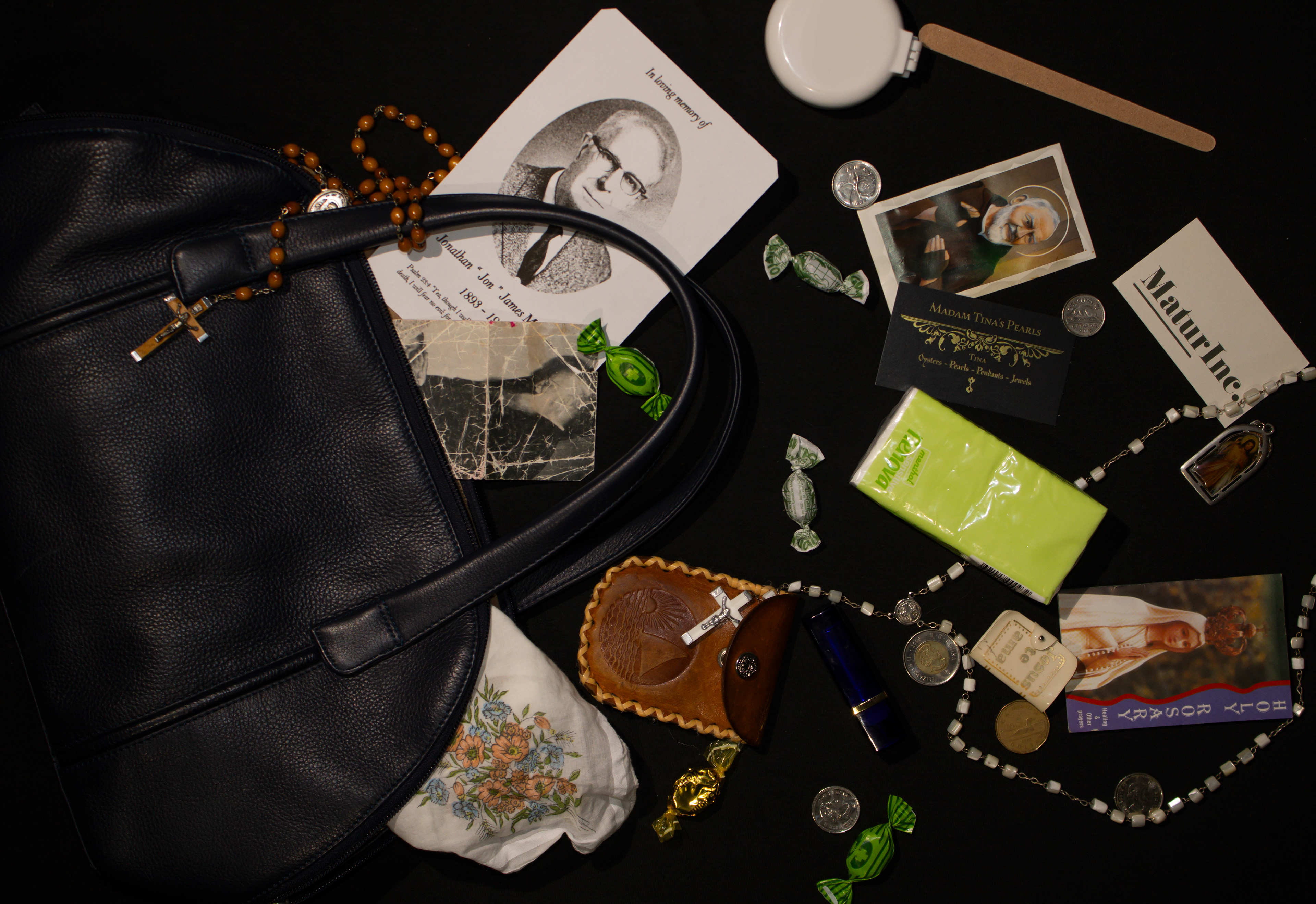
Incomplete Bag, 2023. This woman has completely lost her own sense of identity - she is now merely an object of mourning. Someone who never leaves without her husband’s obituary, tissues, prayer cards and throat lozenges.
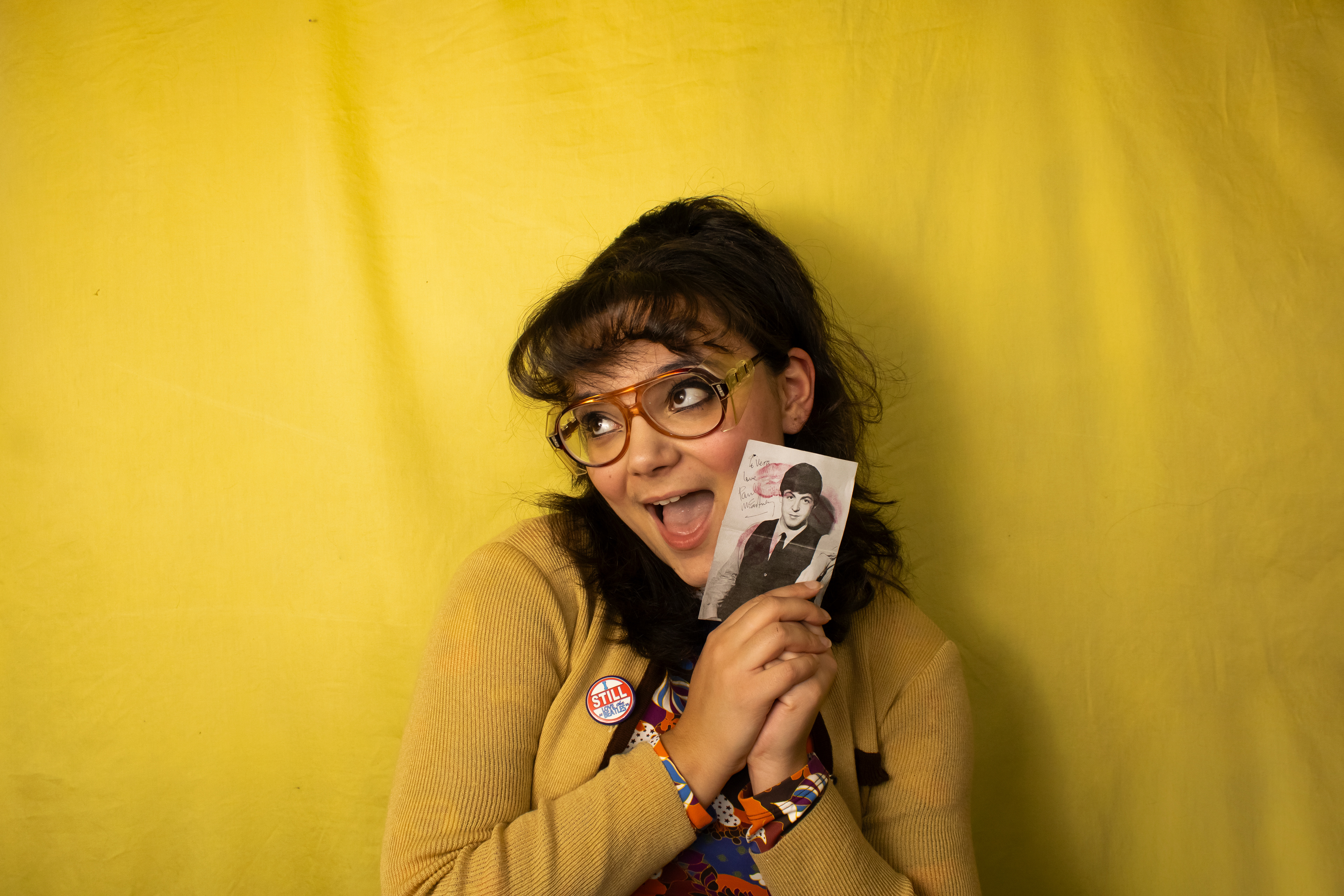
Paul's Girl, 2023. Closest to the artist's true personality, Paul's Girl is representative of the overly eager, boy crazy teenager who spends all day thinking about teenage heartthrobs. Based in the phenomenon of Beatlemania, coupled with the artist's own love for Paul McCartney, the artist compares this young girl amongst the other female architypes.
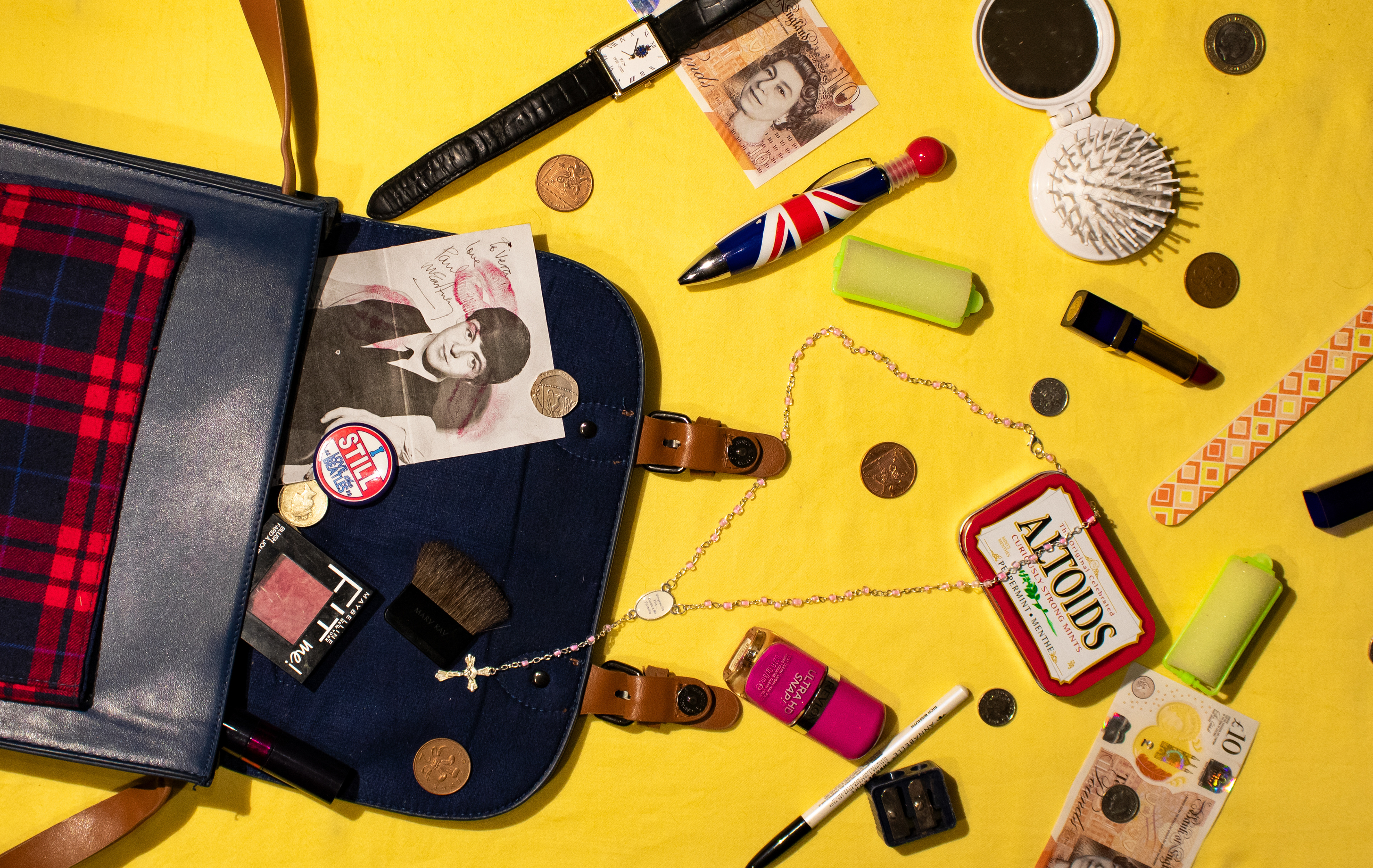
Paul's Girl School Bag, 2023. What does a young, boy crazy girl have to carry around with her? A proto photocard of Paul McCartney, naturally. Amongst other things, she carries loose change, mints -in case she runs into Paul, and a Union Flag pen.
In the series, "What We Carry With Us", the artist reflects on notions of femininity and larger overarching architypes of what femininity looks like in a visual realm. Through this series, the artist reflects on four women - The Call Girl, The Mean Teach, Incomplete, and Paul's Girl. Through the use of makeup, wigs, clothing, and colour, the artist tells a story about these women, posing questions such as who are they? What do these women have in common? What do they need to get through their day? Are they really that different, despite their exterior appearances.
Other Works [Ongoing]
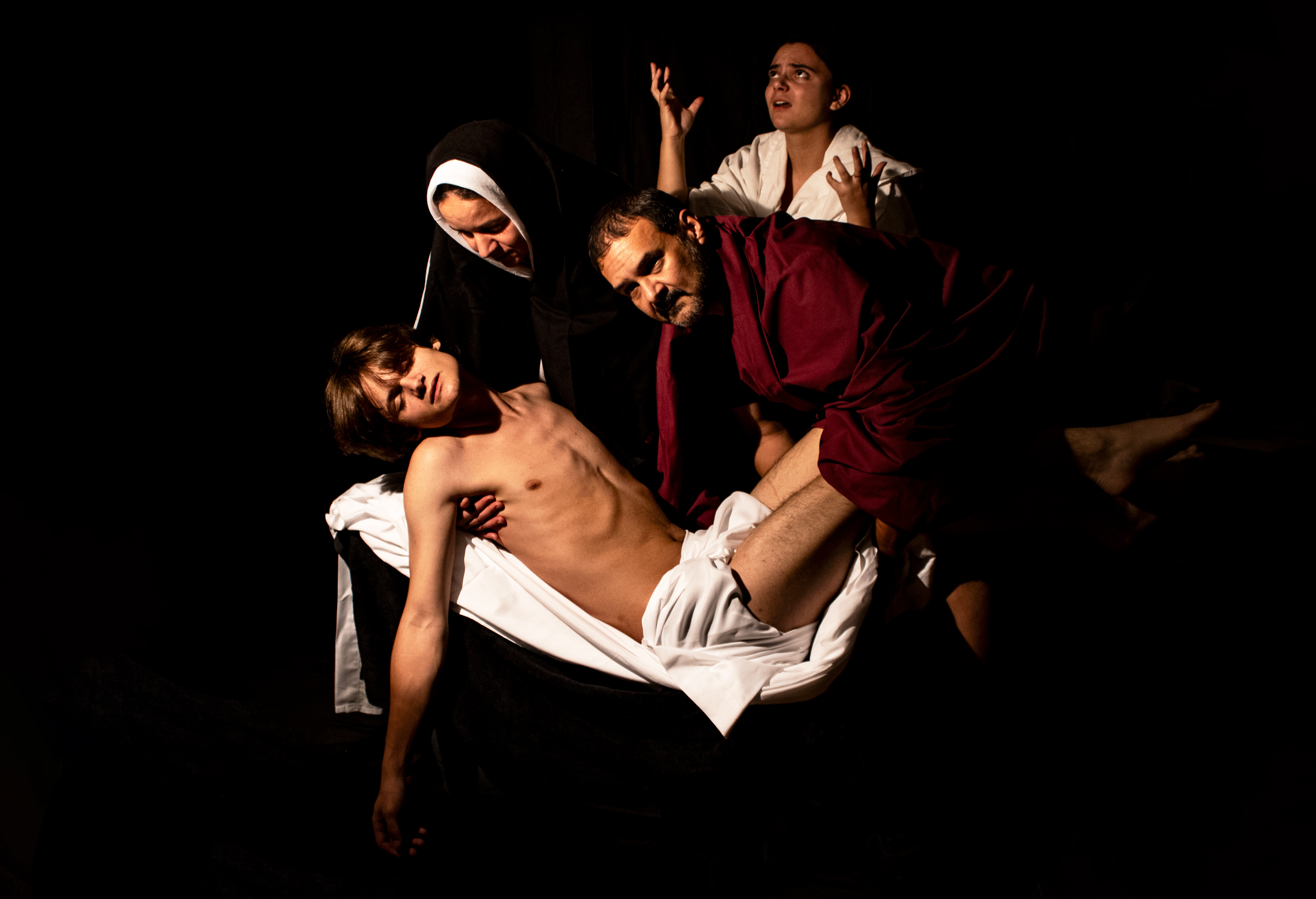
Entombment of Cristo, 2023. Reflecting on eurocentrism within art history, as well as religiosity present throughout a western art historical narrative, the artist evokes the use of her family to take the place of the Holy Family. Through the use of herself and her family in the position of the Holy Family, the artist challenges and changes notions of Holiness, religiousness and visual representation.
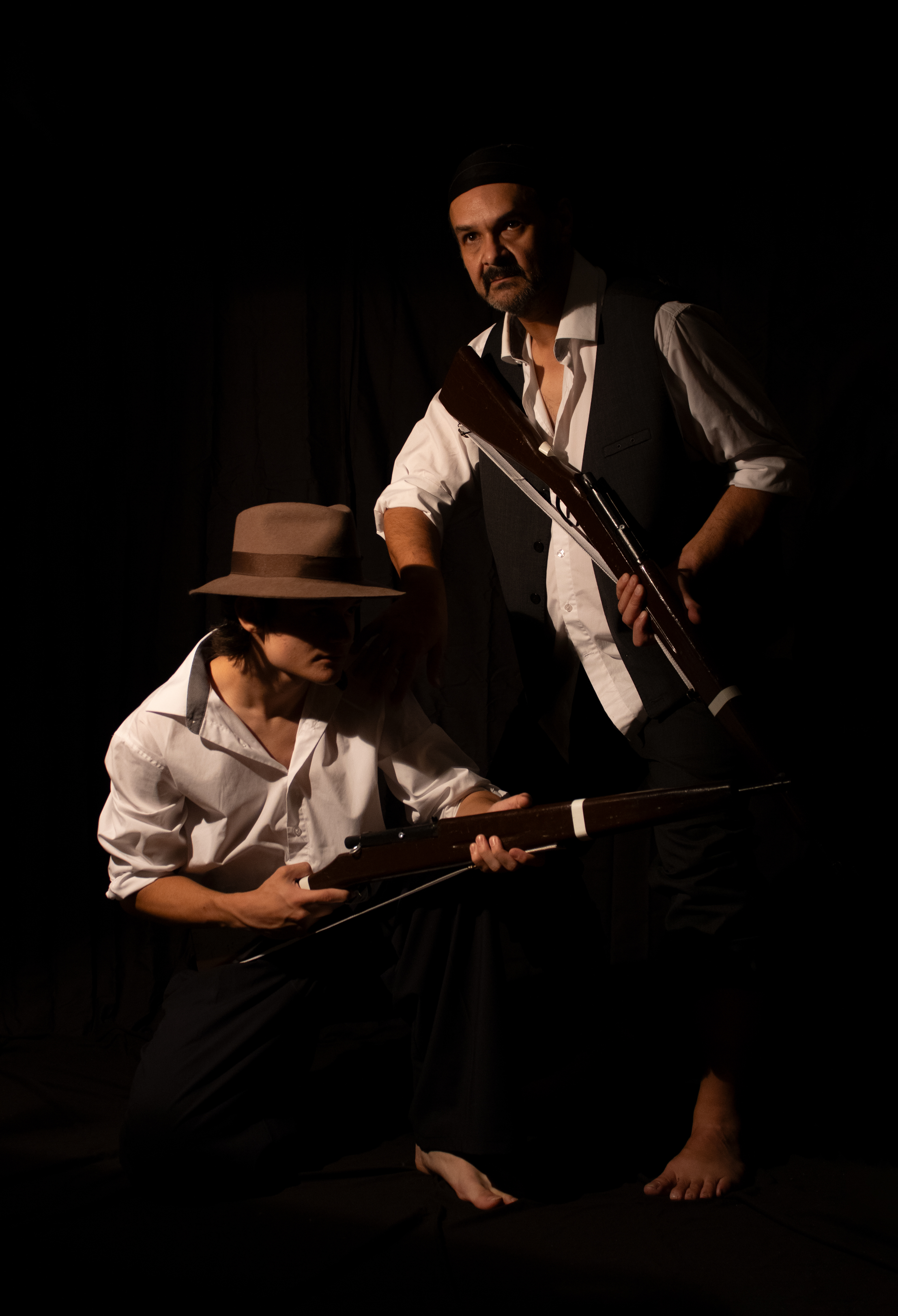
Caipiras Negaceando, 2023.
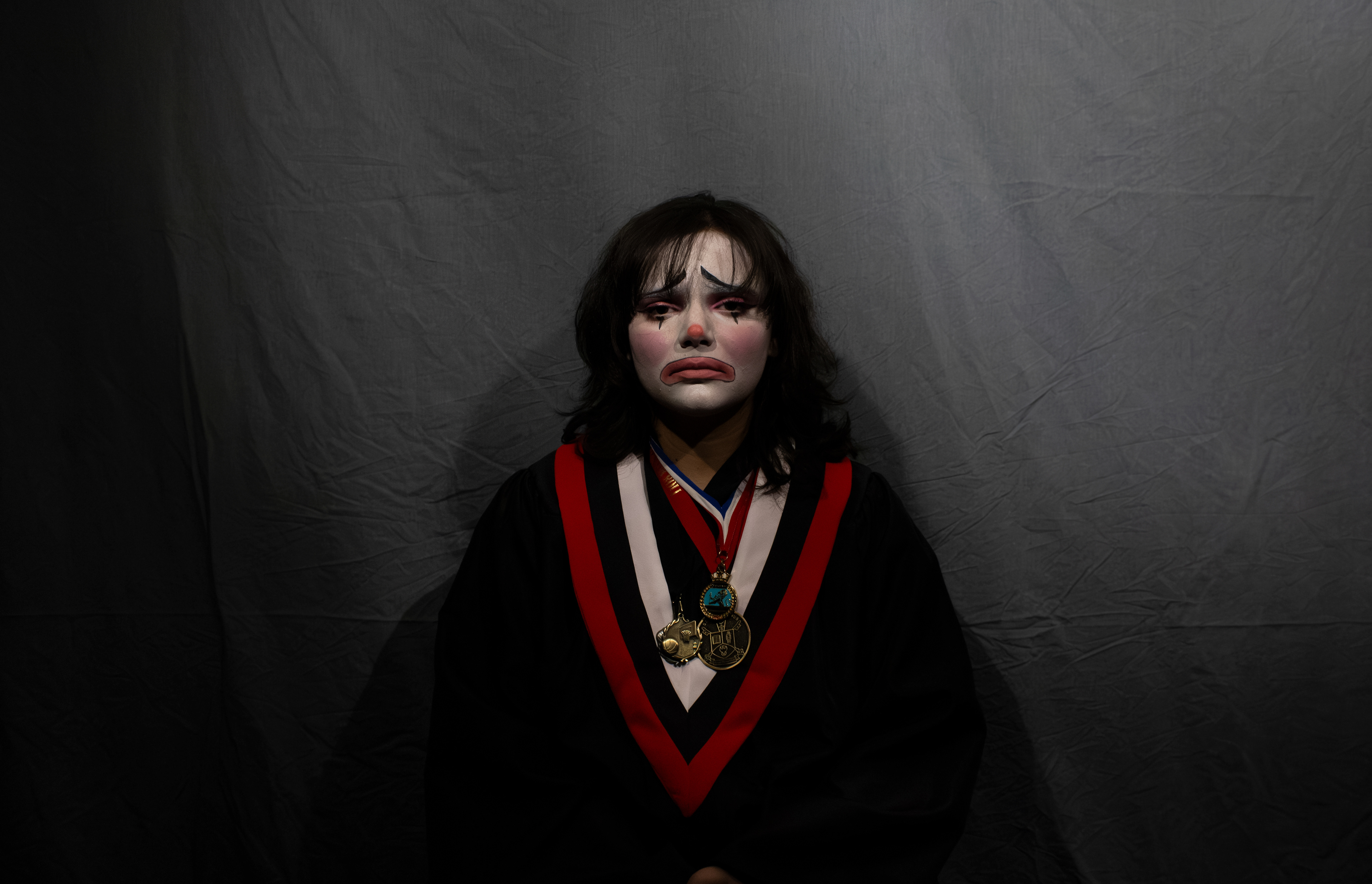
Clowning Around, 2023.
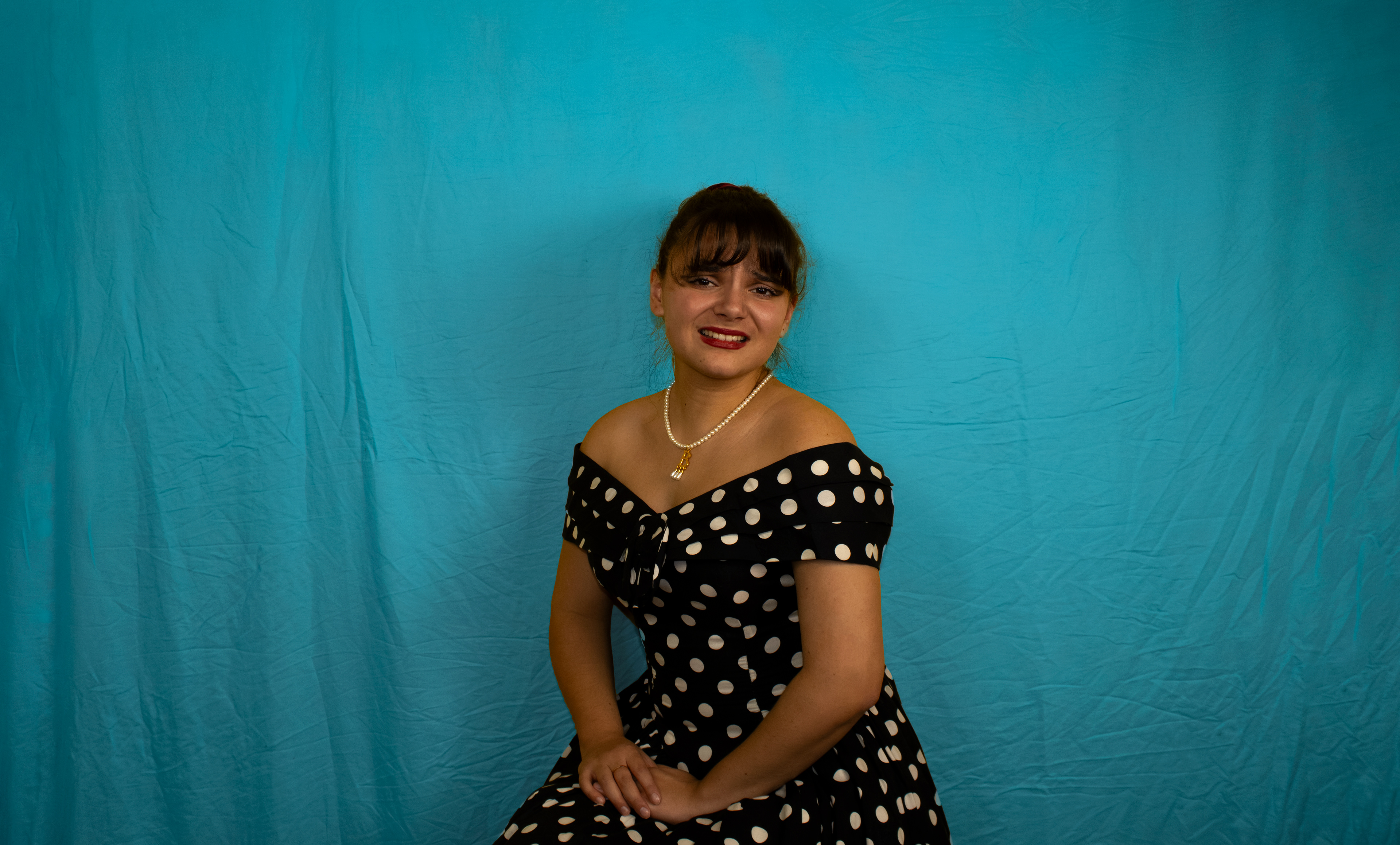
Pretty Woman, 2023.
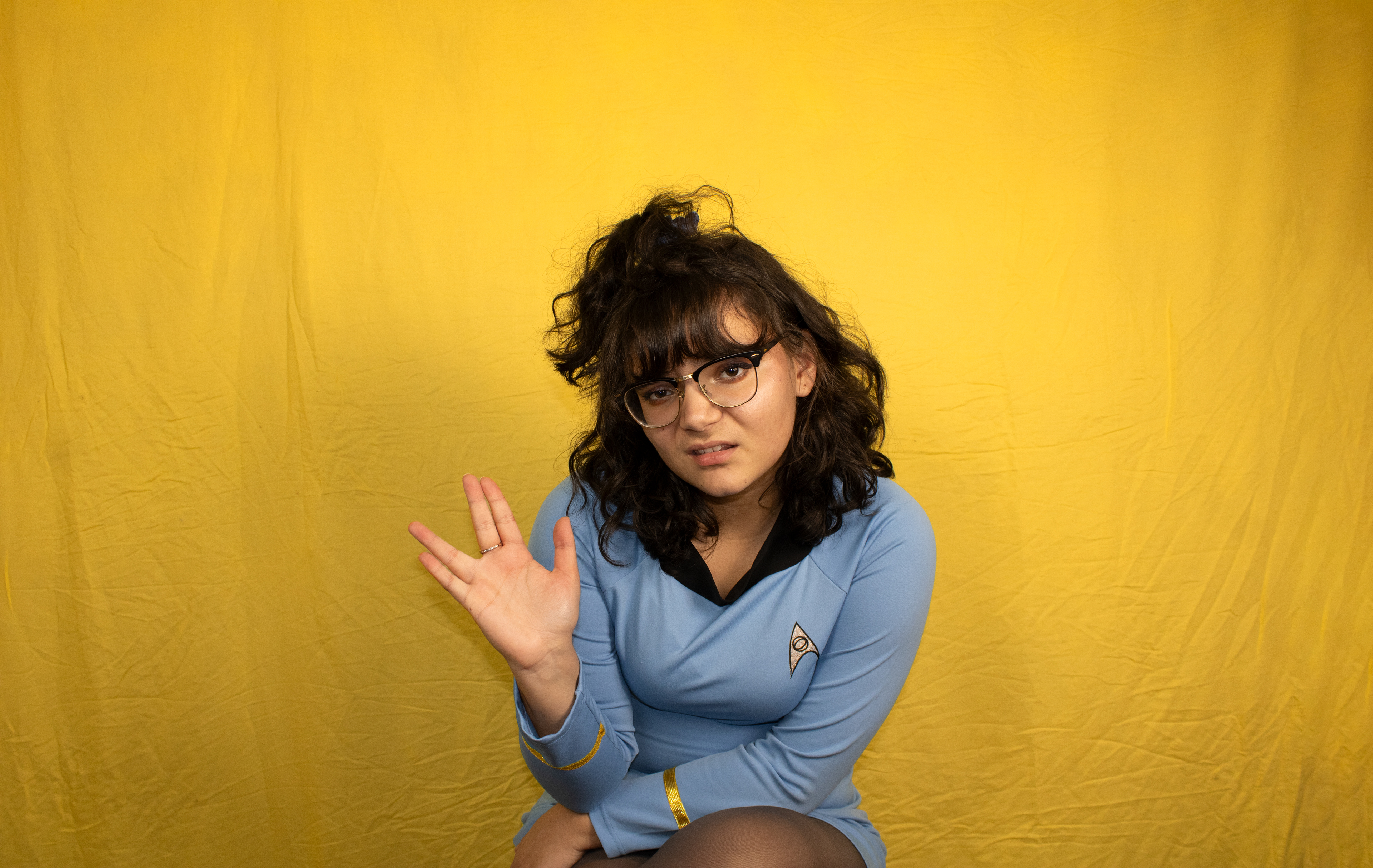
Star Fleet Blues, 2023.
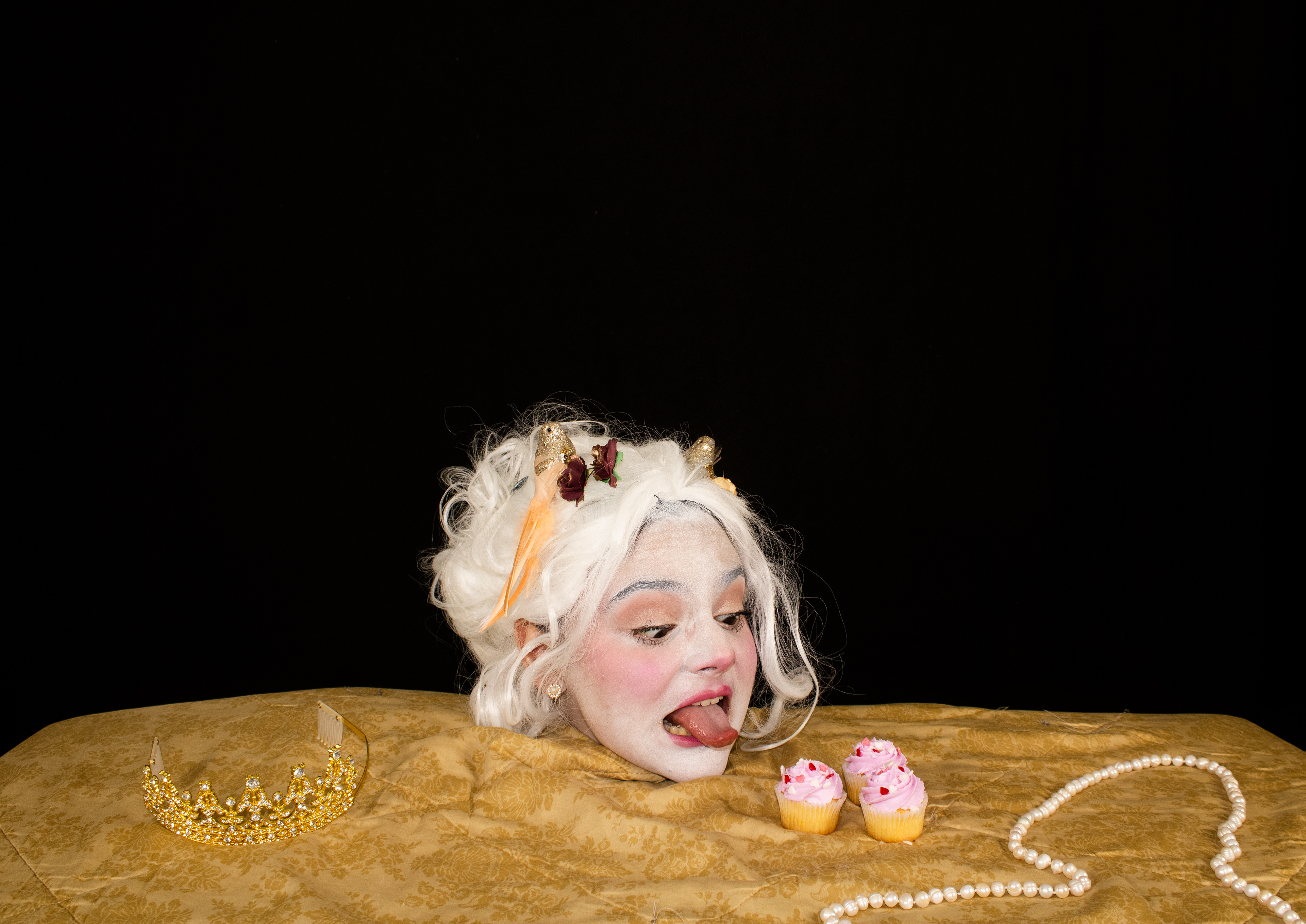
Always Time for Cake, 2023. Duty, Servitude and the Modern Woman’, demonstrates the artist working through female architypes often served to viewers in media – the rich and selfish Queen, the tom-boy hero, who rejects her femininity for seriousness and martyrdom, and the fragile, porcelain doll who is one singular crack away from crumbling her façade of perfection. Through this work, the artist asks what femininity looks like in the case of broad, widely disseminated media, and how it affects ideas of femineity and feminism, identity and notions of belonging.
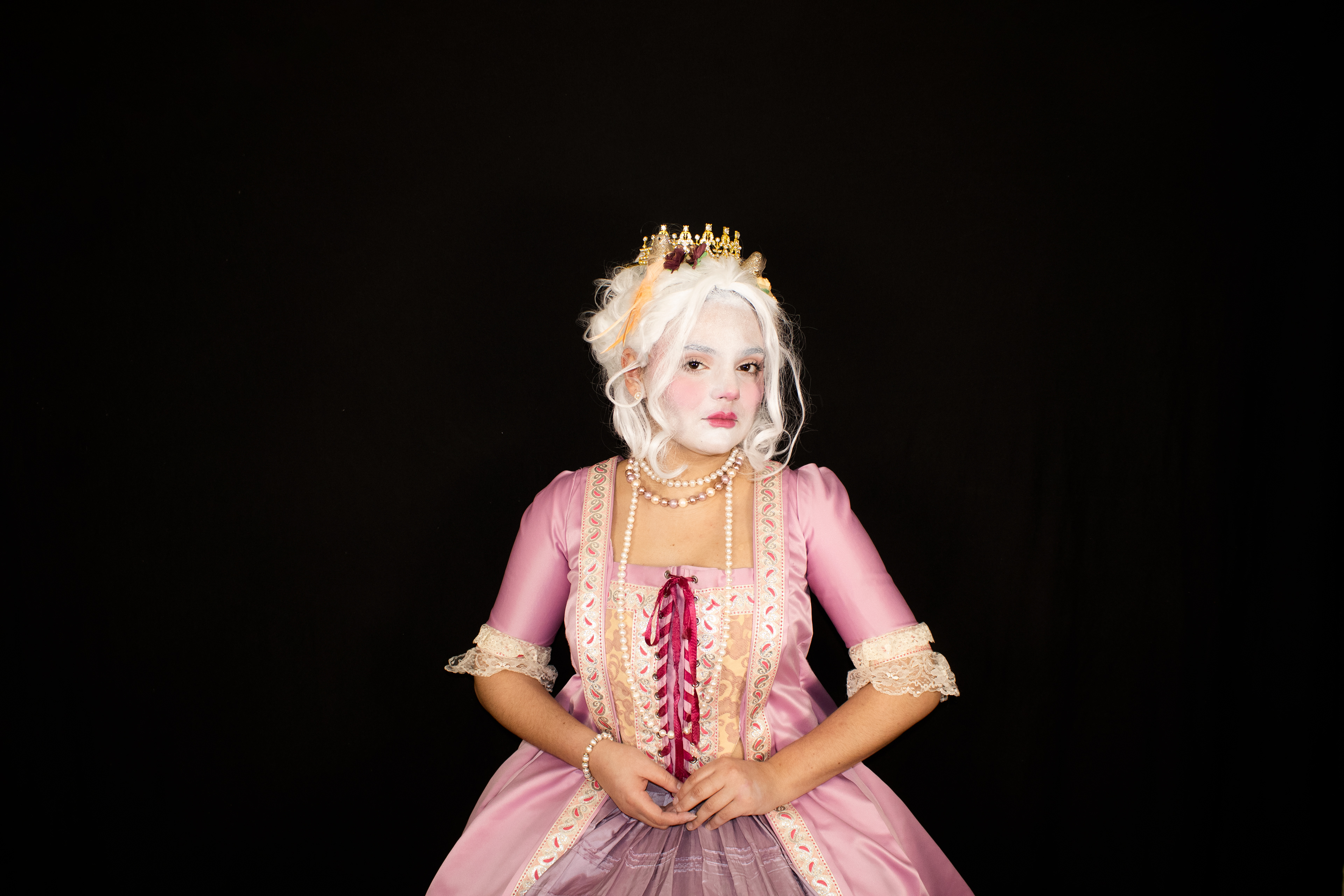
God Save The Queen, 2023. Duty, Servitude and the Modern Woman’, demonstrates the artist working through female architypes often served to viewers in media – the rich and selfish Queen, the tom-boy hero, who rejects her femininity for seriousness and martyrdom, and the fragile, porcelain doll who is one singular crack away from crumbling her façade of perfection. Through this work, the artist asks what femininity looks like in the case of broad, widely disseminated media, and how it affects ideas of femineity and feminism, identity and notions of belonging.
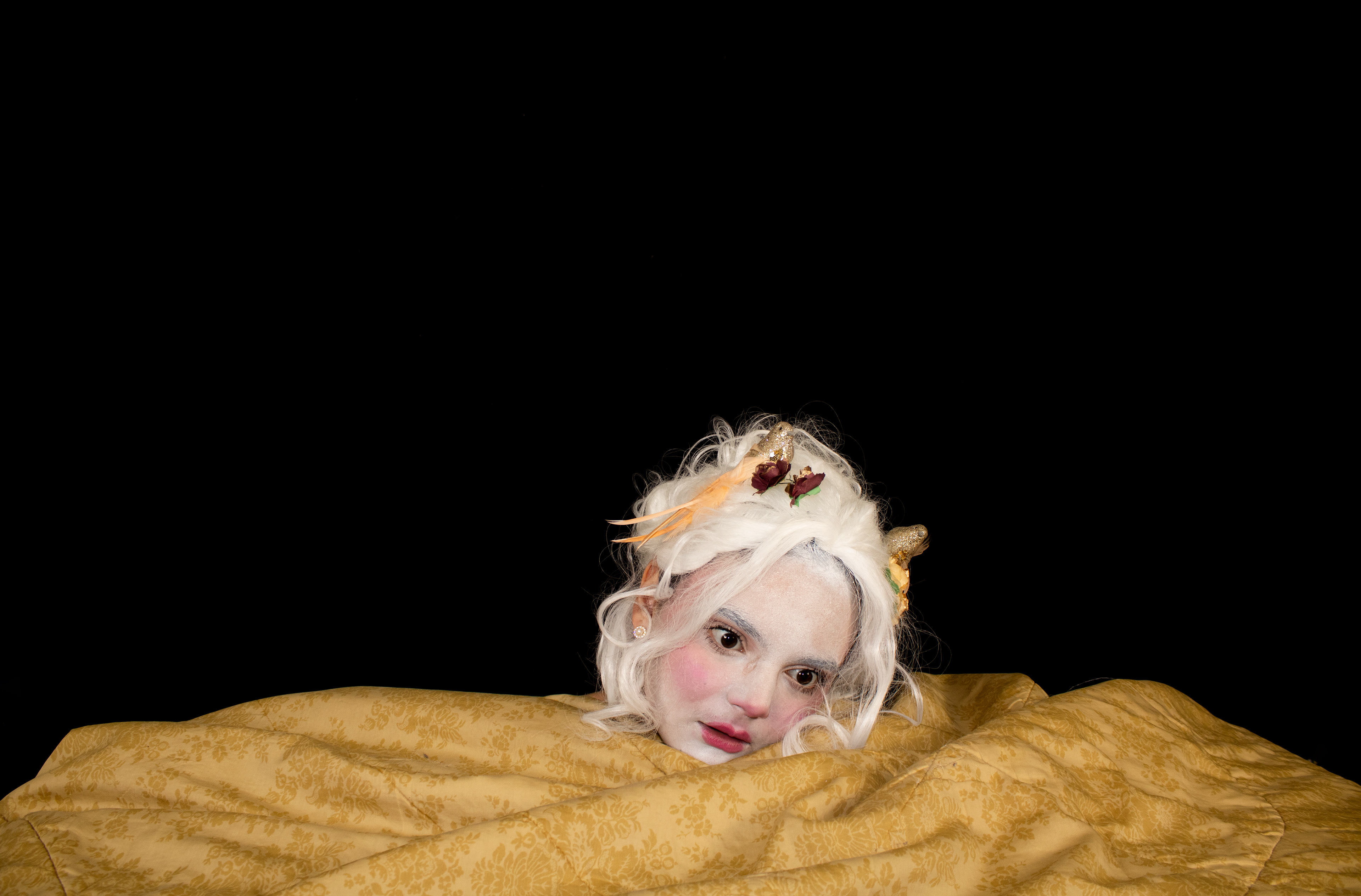
Off With Their Heads, 2023. Duty, Servitude and the Modern Woman’, demonstrates the artist working through female architypes often served to viewers in media – the rich and selfish Queen, the tom-boy hero, who rejects her femininity for seriousness and martyrdom, and the fragile, porcelain doll who is one singular crack away from crumbling her façade of perfection. Through this work, the artist asks what femininity looks like in the case of broad, widely disseminated media, and how it affects ideas of femineity and feminism, identity and notions of belonging.
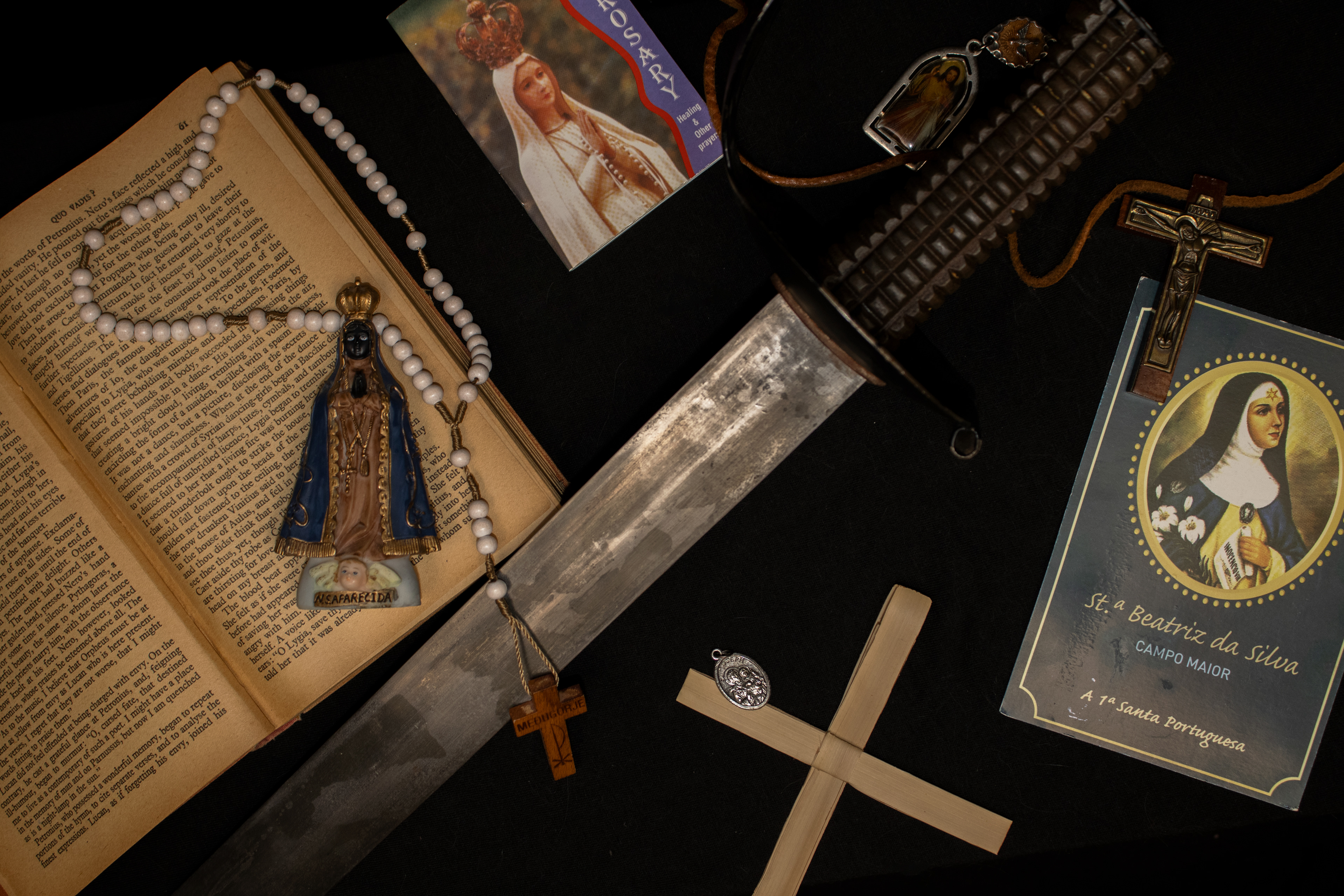
Heroic Needs, 2023.
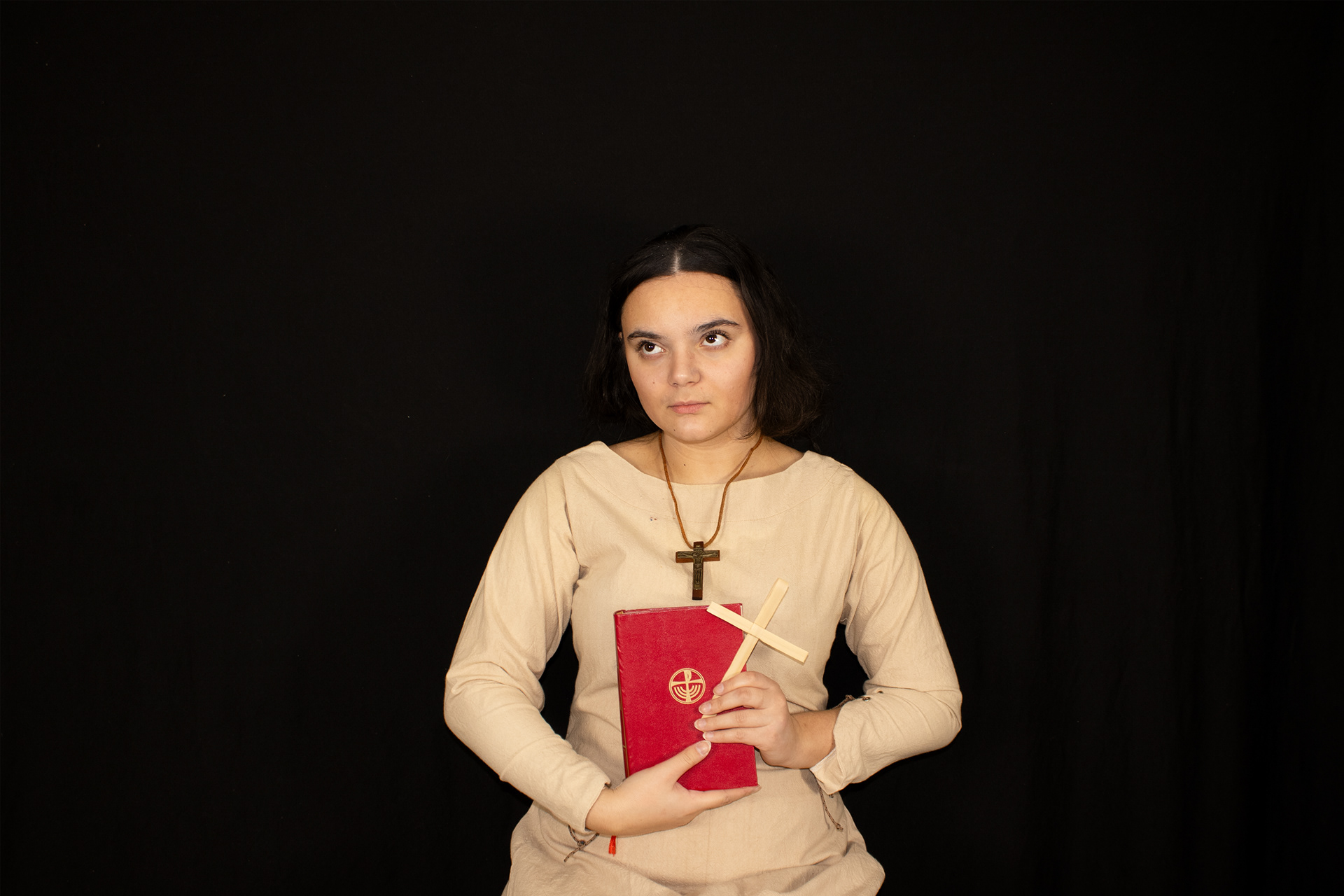
The Martyr, 2023. Duty, Servitude and the Modern Woman’, demonstrates the artist working through female architypes often served to viewers in media – the rich and selfish Queen, the tom-boy hero, who rejects her femininity for seriousness and martyrdom, and the fragile, porcelain doll who is one singular crack away from crumbling her façade of perfection. Through this work, the artist asks what femininity looks like in the case of broad, widely disseminated media, and how it affects ideas of femineity and feminism, identity and notions of belonging.
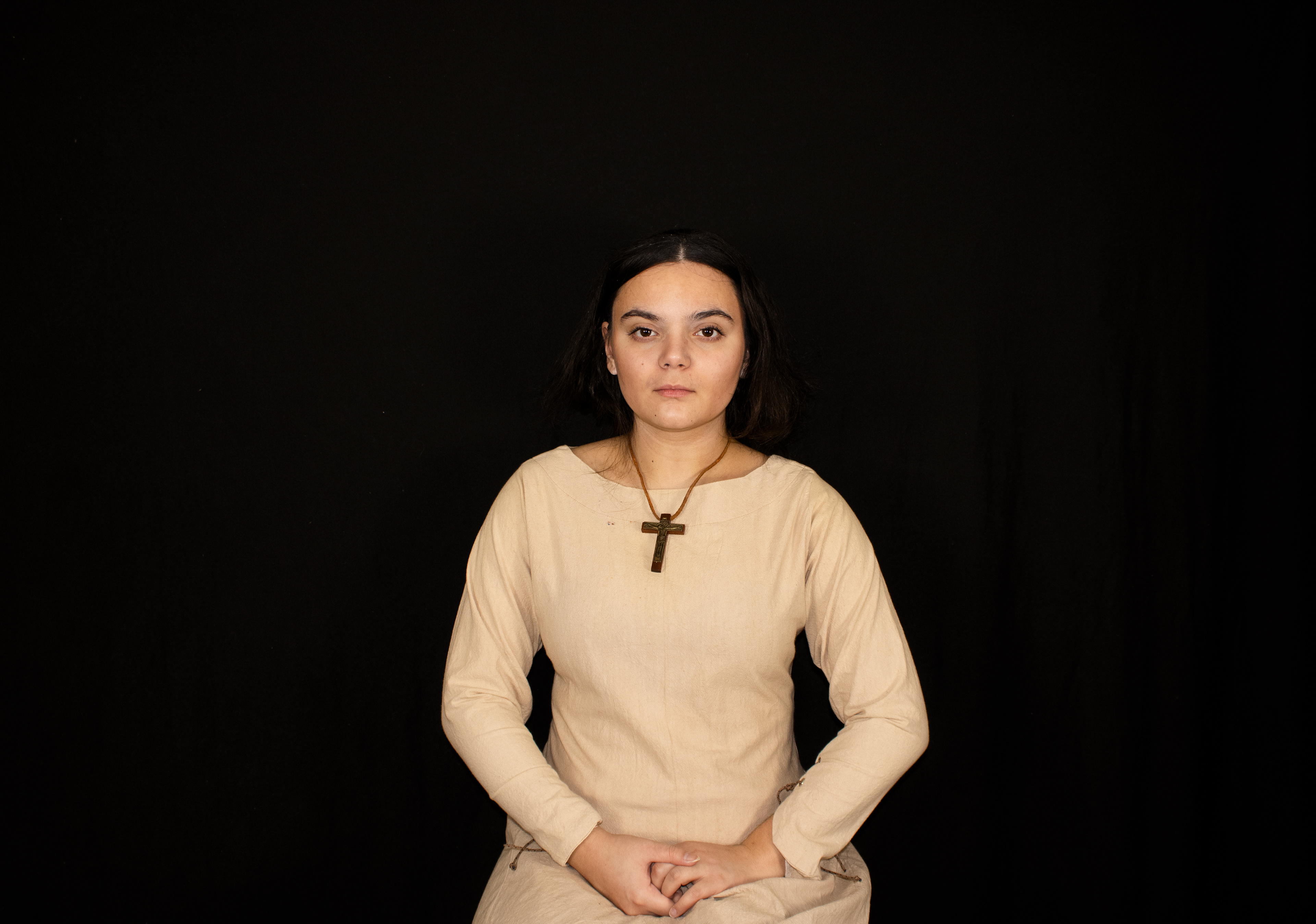
JoA, 2023. Duty, Servitude and the Modern Woman’, demonstrates the artist working through female architypes often served to viewers in media – the rich and selfish Queen, the tom-boy hero, who rejects her femininity for seriousness and martyrdom, and the fragile, porcelain doll who is one singular crack away from crumbling her façade of perfection. Through this work, the artist asks what femininity looks like in the case of broad, widely disseminated media, and how it affects ideas of femineity and feminism, identity and notions of belonging.
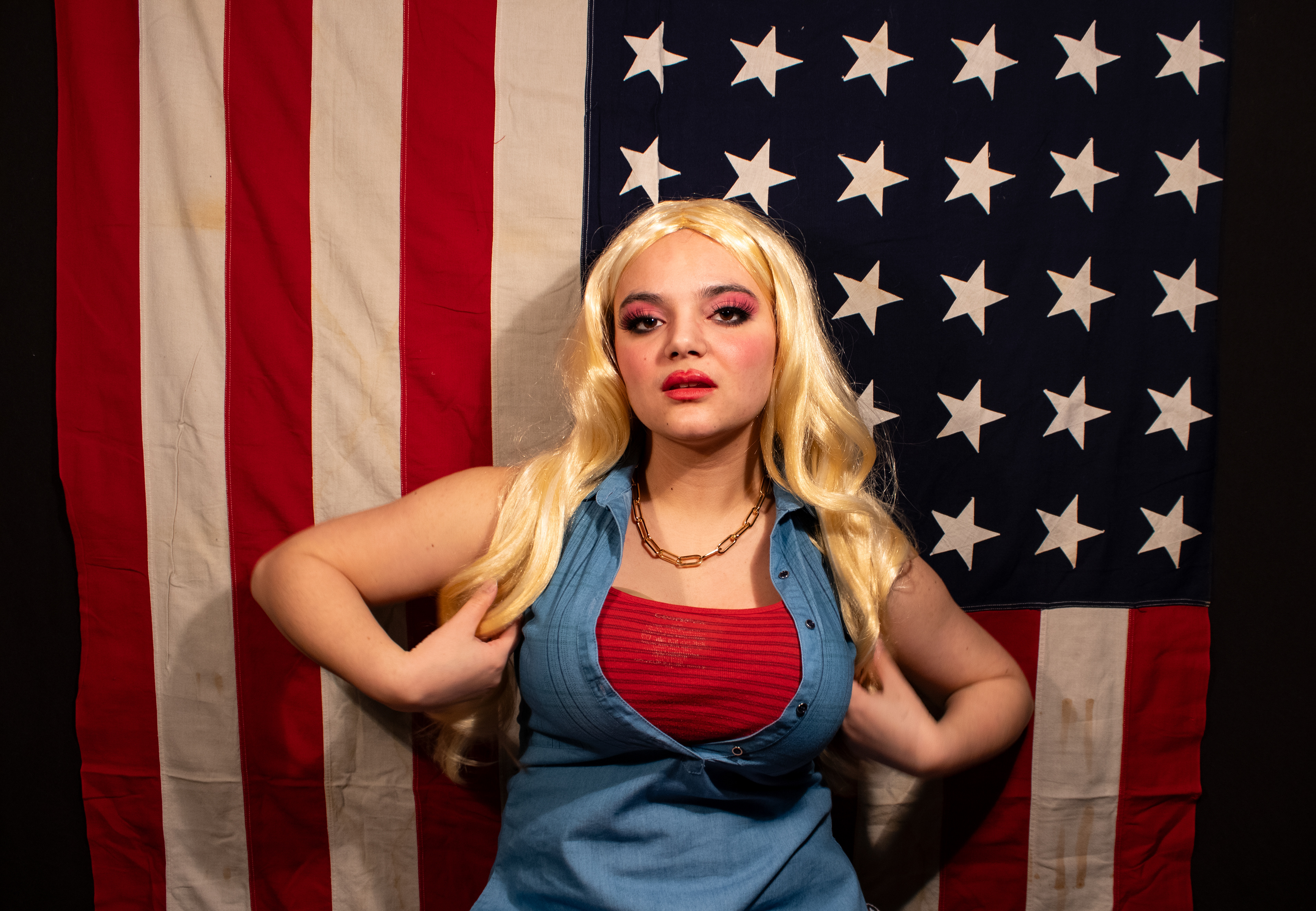
American Princess, 2024.
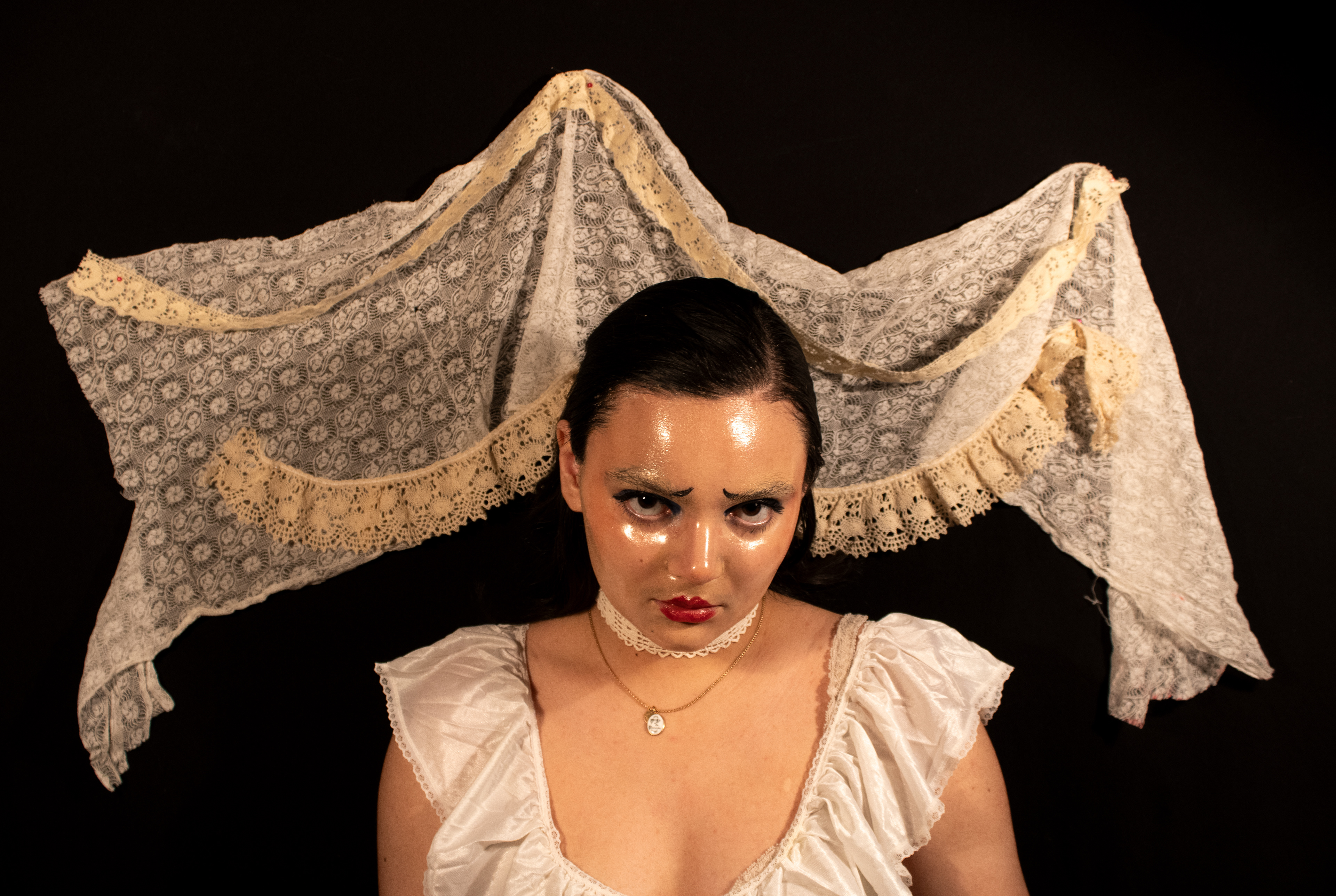
Love and Lace, 2024.
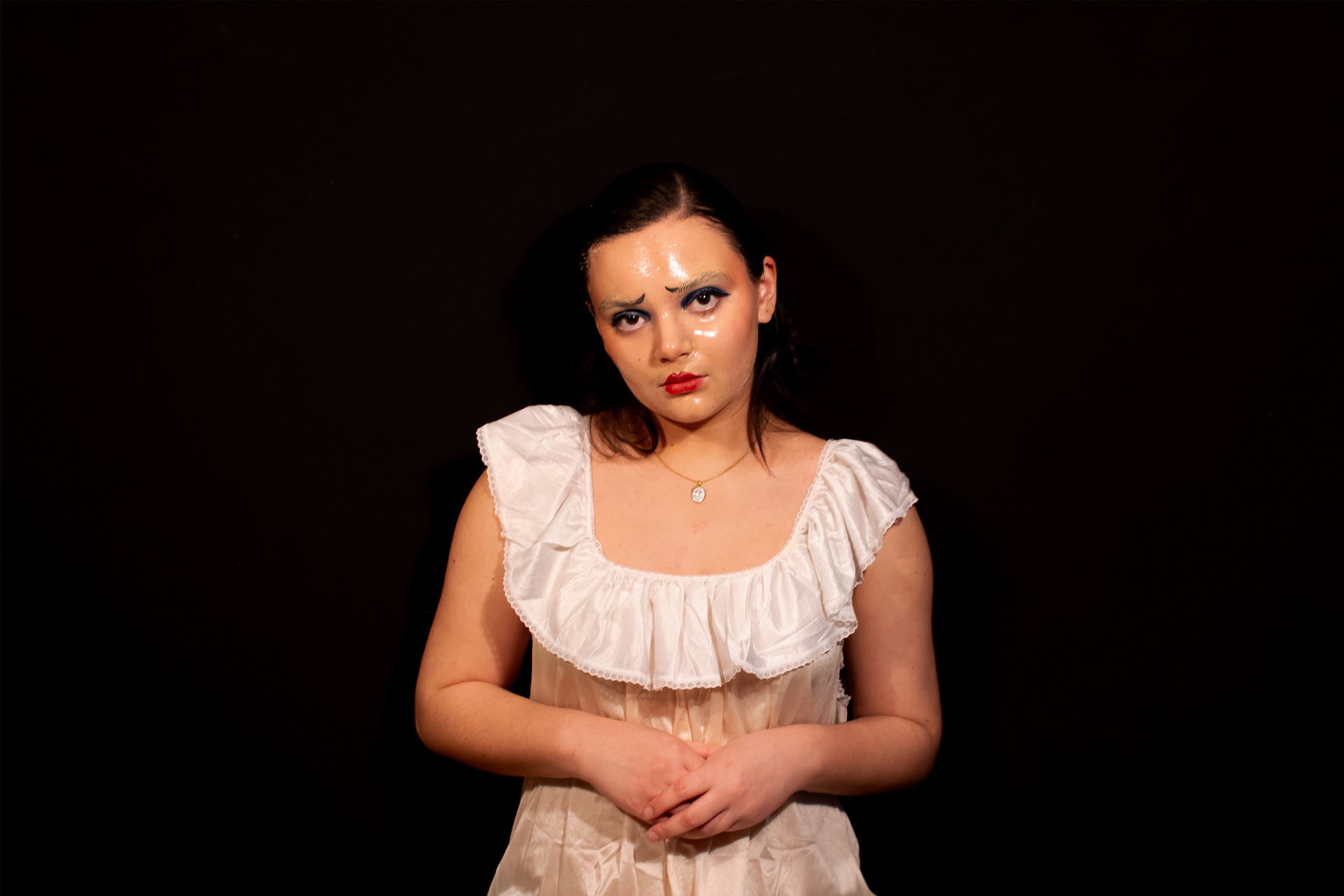
Perfect Porcelain, 2024.
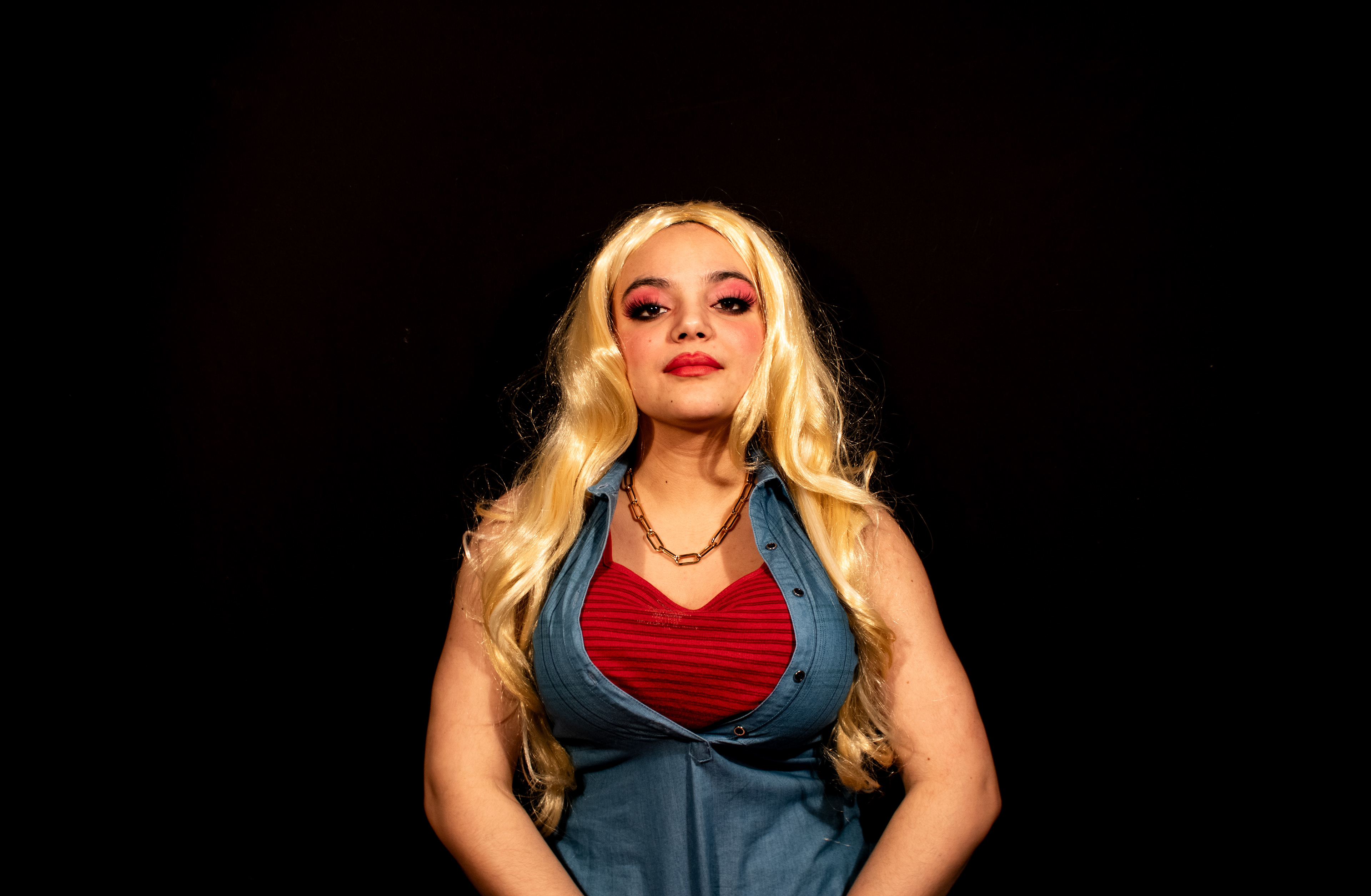
Trailer Park Baby, 2024.